
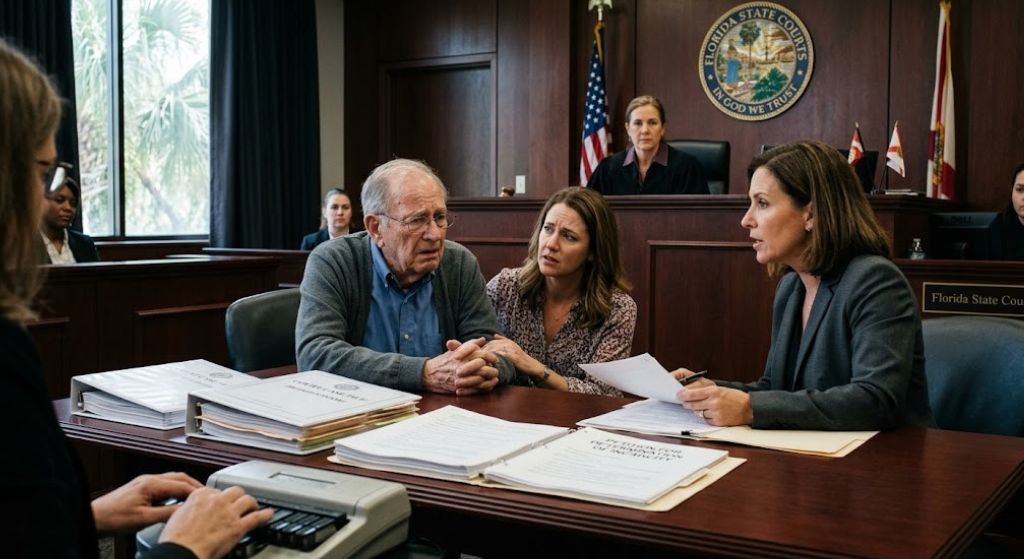
An Incapacity Hearing Florida case decides whether a court should take away some or all of your legal authority to make personal, medical, or financial decisions. That sounds harsh because it is, but the hearing is also designed to protect you from exploitation, family conflict, and unnecessary guardianship.
What an Incapacity Hearing Means in Florida
An incapacity hearing in Florida is part of a guardianship case under Chapter 744, Florida Statutes, where the judge decides whether you can still make specific decisions for yourself. The issue is not simply whether you have a diagnosis. The real question is whether you can understand and manage the decisions that matter most: money, health care, residence, and daily life.
That distinction matters. A hearing like this is not supposed to erase your autonomy by default. It exists to balance safety and independence, which is why Florida law requires the court to consider Florida Guardianship Laws and the least restrictive path before stripping away rights.
Incapacity, Guardianship, and Your Legal Rights
Incapacity and guardianship are not the same thing. Incapacity is the court’s finding that you lack the ability to exercise some or all legal rights. Guardianship is the court’s response, where another person is given authority to act for you.
Florida courts do not treat capacity as all-or-nothing unless the evidence supports that result. You may retain some rights while losing others, which is why a limited guardianship exists. If the evidence shows you cannot manage any delegable rights, the court can enter a plenary guardianship, which is the broadest form of court control. The point is simple: your legal rights are supposed to be removed only to the extent necessary, not more.
The Least Restrictive Alternative Rule
Florida judges must look for alternatives before ordering guardianship. That means a durable power of attorney, trust, health care surrogate, proxy, or other advance directive should be considered first. If those tools already solve the problem, court intervention is unnecessary.
That is why planning matters long before a crisis. A well-drafted Durable Power of Attorney Florida document, paired with a trust and medical directives, often keeps a family out of guardianship court entirely. If you already understand the value of guardianship alternatives, you understand the core Florida policy: protect the person first, then the property, and only as much as needed.
How a Florida Incapacity Case Starts
A Florida incapacity case starts with a petition filed under Chapter 744, usually by a family member, interested person, or someone concerned about safety or exploitation. The court becomes involved when a person shows signs that decision-making has broken down enough to create real risk. At that point, the legal system steps in not to punish anyone, but to determine whether outside control is necessary.
Families often file after watching money disappear, bills go unpaid, medication get skipped, or a vulnerable adult get manipulated by a stranger or even a relative. That is also where Florida Guardianship Process knowledge becomes valuable, because the early steps shape everything that follows.
Warning Signs That Lead to a Petition
The warning signs are usually practical, not dramatic. You see memory loss that affects finances or medication, sudden confusion about familiar tasks, poor judgment with strangers, social isolation, and abrupt changes in mood or behavior. A pattern matters more than a single bad day.
Courts pay attention when ordinary mistakes become a safety problem. Repeated overdrafts, scams, unpaid property taxes, wandering, or refusal of necessary care all point toward possible incapacity. So do sudden personality shifts, especially when paired with cognitive decline or medication issues. A diagnosis alone does not prove incapacity, but a diagnosis plus real-world breakdown often does.
Voluntary vs. Involuntary Guardianship
Florida recognizes both voluntary and involuntary guardianship. In a voluntary guardianship, the person asks for the arrangement, usually because a disability prevents effective management of affairs. In an involuntary guardianship, someone challenges your ability to make decisions and asks the court to impose control.
The hearing matters most in the involuntary setting, because rights are at stake and the contest is real. If you are opposing guardianship, the case becomes a direct fight over whether lesser tools already protect you. If you are supporting a loved one, the hearing is where the court separates genuine incapacity from family disagreement.
What Happens Before the Hearing
Before the hearing, Florida law requires a structured process that looks more like an evidentiary review than a casual family dispute. The court gathers medical and legal information, appoints counsel, and orders evaluations. That pre-hearing work often decides the case before anyone walks into the courtroom.
Appointment of Counsel
You have the right to legal counsel in an incapacity proceeding. If you do not have an attorney, the court appoints one for you. That lawyer is there to protect your legal rights, challenge weak evidence, and force the petitioner to prove the case.
That protection matters because incapacity hearings often involve family tension, medical complexity, and rushed assumptions. A lawyer keeps the focus on evidence, not emotion. That is especially important when Contested Guardianship Florida issues arise and one side tries to turn concern into control.
The Three-Member Examining Committee
Florida law requires the court to appoint an examining committee of three members, including one physician. The committee evaluates your mental and functional capacity and prepares reports for the judge. These reports are not casual opinions. They are central evidence.
What the Committee Reviews
The committee typically reviews medical records, cognitive testing, mental health screening, medication effects, interviews, and activities of daily living. It looks at whether you understand bills, manage property, make health decisions, and appreciate consequences. That is why a committee report can carry so much weight: it translates medical facts into legal capacity findings.
Expert testimony matters here. A physician may explain the nature of a neurological condition, while another examiner may describe how that condition affects daily functioning. The court needs that link. A diagnosis by itself does not answer the legal question, but expert testimony often does.
Reports, Notices, and Evidence Gathering
Before the hearing, the court collects committee reports, notices, witness statements, financial records, and other documents. Family testimony, caregiver observations, and bank records often tell the real story. If you are defending your rights, consistent records showing sound decisions, routine bill payments, and coherent medical choices can make a difference.
That is where planning and documentation intersect. If your estate plan already includes Incapacity Planning Strategies, you start from a stronger position because the court can see a pattern of deliberate decision-making, not chaos.
What Happens During the Incapacity Hearing
The hearing is where the judge decides whether the evidence proves incapacity and, if so, which rights should be removed. It is an evidentiary hearing, which means testimony matters, documents matter, and the court must make findings based on proof. You are not judged by rumor, family pressure, or a diagnosis alone.
Who Attends the Hearing
The judge, you, your attorney, the petitioner, and witnesses may attend. Medical professionals, caregivers, and family members often testify. Depending on the dispute, the hearing may feel very personal, but the court’s job stays the same: decide capacity based on reliable evidence.
What the Judge Decides
The judge does not ask only whether you have dementia, Alzheimer’s, or another impairment. The judge decides whether you can exercise specific rights, such as managing property, consenting to medical treatment, determining residence, or handling contracts. Capacity is decision-specific.
That point is often missed by families. A person can struggle with finances yet still understand medical decisions. Or a person can handle simple daily choices but fail when complex assets are involved. Florida law requires a narrower, more careful analysis than a blanket label.
Evidence the Court Considers
The court weighs medical testimony, committee findings, behavior patterns, financial problems, and testimony from family or caregivers. Documentary evidence often becomes the anchor, especially when there are bank records, unpaid obligations, suspicious transfers, or proof of declining judgment.
If property is involved, the stakes rise fast. A judge who sees unmanaged real estate, missing payments, or exploitation has a clearer basis to act. That is why families dealing with a parent’s home, rental property, or business interests often need guidance on Guardianship of Elderly Parents before the hearing escalates.
How the Hearing Protects Your Due Process Rights
Florida law gives you notice, counsel, the chance to challenge evidence, and the right to respond before rights are removed. That is due process in practice. Without those protections, guardianship would become too easy to impose and too hard to correct.
Possible Outcomes After the Hearing
The judge has three basic outcomes. Each one changes your autonomy in a different way, and each one follows from the evidence, not from sympathy or suspicion.
Finding of Full Capacity
If the court finds you have full capacity, the petition is dismissed and no guardian is appointed. Your rights remain intact. That result usually follows when the evidence shows sound judgment, adequate support systems, or a lesser problem that does not rise to incapacity.
Finding of Limited Capacity
If the court finds limited capacity, you keep the rights the judge does not remove. The order identifies the specific rights transferred to a guardian and the specific rights you retain. This is the middle-ground result Florida prefers when you still function well in some areas but need help in others.
Finding of Total Incapacity
If the court finds total incapacity, the judge can appoint a plenary guardian to exercise all delegable legal rights and powers. That is the most serious outcome because it places nearly all major decisions under court control. When that happens, the guardian’s duties matter just as much as the original finding, because abuse or neglect can lead to removal.
How to Protect Your Rights Before and During the Hearing
The best protection starts before the petition is filed. You protect yourself by building legal alternatives, preserving records, and forcing the case to stay focused on actual function rather than fear. Families that plan early usually avoid the harshest outcomes.
Use Advance Planning Tools First
Durable powers of attorney, revocable trusts, health care surrogate designations, and living wills are the backbone of incapacity planning. They give trusted people authority without forcing a courtroom fight. If you want a practical comparison, guardianship vs power of attorney is the right concept to understand before anyone files a petition.
For medical decisions, a properly signed Designation of Healthcare Surrogate and Living Wills Florida directive can keep your preferences in force during a health crisis. For property, a Florida Revocable Living Trust can protect assets and reduce the need for court supervision.
Build a Record of Capacity
Keep medical notes, financial records, and examples of routine decision-making. If you pay bills, manage accounts, attend appointments, and handle your affairs responsibly, document it. A clean record undercuts claims that you need a guardian.
Challenge Overbroad Claims
A petition based only on diagnosis, family disagreement, or one bad transaction is too thin. The court needs proof that you cannot handle specific decisions and that no less restrictive alternative works. That is where careful testimony and clean records matter more than emotional claims.
Avoid Common Mistakes Families Make
Families often wait too long, file before gathering records, or ignore signs that a medical issue is temporary, like infection or medication side effects. Another common mistake is assuming guardianship is the only answer when a power of attorney or trust already solves the problem. In urgent medical situations, some families rush toward Emergency Temporary Guardianship without checking whether a narrower option exists.
When You Need Legal Help in Broward and Miami-Dade County
Local experience matters in Hollywood, Pembroke Pines, Fort Lauderdale, and nearby Broward and Miami-Dade communities because guardianship disputes move fast and touch both family and property rights. You want counsel that understands the court process, the medical evidence, and the asset protection consequences.
When to Call a Florida Guardianship Attorney
Get legal help immediately if you are served with a petition, a committee evaluation is scheduled, exploitation is suspected, or relatives disagree about less restrictive alternatives. Those are not situations for guesswork. They are situations for strategy.
Why Early Strategy Protects Family Assets
The earlier you plan, the more control you keep over property, health care, and decision-making. Once a court order takes effect, options narrow quickly. That is why good incapacity planning protects more than autonomy, it protects the family balance sheet.
Understanding this process also tells you when rights can be restored. If capacity improves or the original order was too broad, Terminating Florida Guardianship becomes the next legal issue worth studying.
Frequently Asked Questions
What is the main issue in an incapacity hearing?
The judge decides whether you can make some or all personal, medical, or financial decisions for yourself. A diagnosis alone does not answer that question.
Do you automatically lose all rights if incapacity is found?
No. Florida uses limited guardianship when you still have capacity for some decisions. Total loss of rights happens only if the evidence supports plenary guardianship.
Who evaluates capacity in Florida?
The court appoints a three-member examining committee, including one physician. The committee reviews medical and functional evidence and submits reports to the judge.
Can family members testify at the hearing?
Yes. Family members, caregivers, friends, and other witnesses can testify, along with medical professionals and documentary evidence such as records and financial statements.
Can a power of attorney prevent guardianship?
Yes, if it is valid, active, and broad enough to handle the problem. Florida courts must consider less restrictive alternatives before imposing guardianship.
What happens if the court finds you fully capable?
The petition gets dismissed, and no guardian is appointed. Your legal rights remain with you.
Know the Difference Between Protection and Control
An incapacity hearing is not just a medical review, it is a legal test of whether the court should replace your judgment with someone else’s. Once you understand that, the strategy becomes obvious: build documents, preserve proof, and challenge any attempt to expand court control beyond what the evidence supports.