
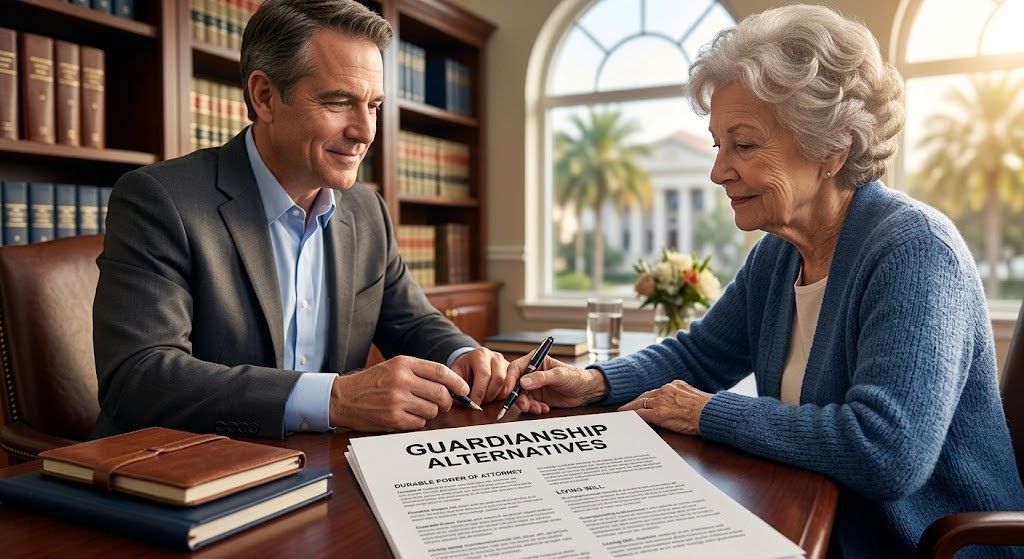
Guardianship Alternatives matter because once a court takes control, you lose flexibility, privacy, and speed. In Florida, the better move is to plan early with legal tools that preserve your authority over property, health care, and financial decisions before a crisis forces court involvement.
You should understand this much from the start: guardianship is a court-supervised transfer of legal authority, while guardianship alternatives let you keep control by naming trusted decision-makers in advance. That difference is the whole game, especially if you own a home, rental property, or business interests in Broward or Miami-Dade County.
Why Guardianship Should Be Your Last Resort in Florida
Florida follows a least-restrictive approach. That means a court should use guardianship only when no less restrictive option works, and even then, the court should preserve as many rights as possible. Once guardianship starts, you add hearings, notices, reporting duties, and delay, all of which are expensive when families are already under pressure.
How Florida Defines Guardianship and Incapacity
Guardianship becomes necessary when a person cannot manage some or all of the rights tied to personal care, health care, or property. Incapacity is not a casual label. It is a legal finding that changes who can sign documents, access accounts, and make decisions about real estate, medical treatment, and daily life. If you want a deeper look at how the court evaluates that process, review what happens in an incapacity hearing in Florida.
Limited vs. Plenary Guardianship
Florida recognizes limited guardianship and plenary guardianship. Limited guardianship removes only the powers the court finds necessary, which preserves some independence. Plenary guardianship removes all delegable rights and powers. That is why the least restrictive option matters. If you are already facing court involvement, learning the difference between a guardian’s authority and your remaining rights starts with Florida guardianship laws.
Why Families Get Caught Off Guard
Families usually miss the warning signs before a petition is filed. A stroke, dementia diagnosis, hospital discharge, or unpaid property tax bill forces quick decisions, and nobody has authority lined up. Pew has found major information gaps across state systems, including limited plain-language guidance and few online tools for families navigating guardianship. When people do not prepare, the process becomes taxing, time-consuming, and far more likely to turn into a court problem than a private solution.
Top 5 Guardianship Alternatives Every Florida Property Owner Should Know
The strongest guardianship alternatives do one of three things: they name a decision-maker, move authority to a trust, or direct how assets pass without court approval. The right tool depends on whether your main concern is money, real estate, medical care, or benefit protection. In practice, Florida estate planning works best when these tools are coordinated, not used in isolation.
1. Durable Power of Attorney
A durable power of attorney lets you name someone to handle financial and property matters if you lose capacity. Used correctly, it lets your chosen agent pay bills, manage accounts, sign tax filings, and deal with property transactions without asking a judge first. For many families, it is the cleanest answer to avoiding involuntary state supervision, especially when paired with thoughtful incapacity planning strategies.
What Powers It Can Cover
A properly drafted document can cover banking, insurance, taxes, business matters, and real estate transactions. That matters if you own a residence in Hollywood, a condo in Fort Lauderdale, or investment property in Pembroke Pines. It can also support business continuity, which is why it belongs in any serious Florida real estate planning and asset protection strategy.
Florida Drafting Pitfalls to Avoid
Bad drafting wrecks good intentions. Outdated forms, missing powers, vague language, and improper execution can leave the document useless when a bank, title company, or brokerage reviews it. If you own titled property, you need a document that is accepted in the real world, not just one that looks fine on paper. For a direct comparison, see how a durable power of attorney keeps your family out of guardianship court.
2. Revocable Living Trust
A revocable living trust keeps property management out of court by placing assets under a trust structure you control while you are well. If you become incapacitated, your successor trustee steps in and continues management under the trust terms. That is a powerful alternative for anyone who owns homes, rental units, or mixed personal and business assets. It also fits neatly with a Florida revocable living trust for asset management.
Why Trusts Matter for Real Estate Owners
Real estate does not stop needing management because you become incapacitated. Mortgages get paid, insurance must stay current, tenants still need repairs, and tax deadlines do not pause. A trust lets those obligations continue without a guardianship petition, which is why title holders use this tool to protect continuity and reduce court exposure.
Funding the Trust Correctly
A trust only works if assets are actually transferred into it or aligned with it. Deeds, account titles, and beneficiary designations have to match the plan. Miss that step and the trust becomes an expensive binder on a shelf. Proper funding is where many plans succeed or fail, and it is exactly where experienced estate planning counsel earns its keep.
3. Health Care Surrogate Designation and Living Will
Medical authority should never wait for a courtroom. A health care surrogate designation lets you appoint someone to make health care decisions if you cannot speak for yourself, while a living will sets out your end-of-life treatment preferences. Together, they reduce family conflict, prevent delay, and keep treatment decisions where they belong, with the person you chose. If you want to understand the medical side of planning more deeply, start with why a designation of healthcare surrogate matters before emergencies and Florida living wills.
Health Care Surrogate vs. Living Will
The surrogate makes decisions. The living will gives instructions. Those are not the same thing, and you need both. One handles the moment, the other records your values. That distinction becomes very clear when a hospital asks for authority during a crisis.
Why Medical Planning Protects Your Family
When the documents are in place, your family avoids emergency petitions, bedside arguments, and last-minute uncertainty. That reduces stress and keeps attention on care, not court procedure. It is one of the simplest ways to keep guardianship from becoming the default response.
4. Pre-Need Designations and Beneficiary Planning
Some assets pass outside probate and outside guardianship simply because you named a destination in advance. Payable-on-death and transfer-on-death designations are narrow tools, but they matter. They keep the transfer process simple and reduce the number of assets that ever need court control.
Payable-on-Death and Transfer-on-Death Designations
POD and TOD designations work for certain bank and brokerage accounts. When properly set up, they direct the asset to a named beneficiary without waiting for probate. Used wisely, they support a broader estate plan and reduce the number of assets that become frozen during incapacity or after death.
Beneficiary Updates and Asset Coordination
Old beneficiary forms cause real damage. A retirement account left to an ex-spouse or an account that conflicts with your trust can derail a plan fast. Review every account title and beneficiary form together. That is basic asset protection, and it matters just as much as the documents themselves.
5. Special Needs Trust and Representative Payee Options
When a family member has a disability, the goal is protection without unnecessary loss of independence. A special needs trust can preserve eligibility for public benefits while supplementing care. A Social Security representative payee can manage benefits in a focused way without turning to guardianship for everything. For families managing a vulnerable parent, child, or disabled adult, these tools often fit better than a broad court order.
When a Special Needs Trust Makes Sense
A special needs trust works when you want to support quality of life without disqualifying the person from needs-based benefits. That is the point. It protects access while covering extras that public programs do not pay for.
Social Security Representative Payee
A representative payee handles Social Security benefits for someone who cannot manage them independently. It is a narrow authority, but it solves a real problem without taking away unrelated rights. In the right case, narrow authority is the smarter answer.
Which Alternative Fits Your Situation
You do not need every tool. You need the right tool. If your main issue is financial control over property or accounts, a durable power of attorney and a trust do the heavy lifting. If your main issue is health care, use a surrogate designation and a living will. If your family member receives public benefits, look at a special needs trust or representative payee structure first.
If Your Main Concern Is Real Estate or Bank Accounts
Start with a durable power of attorney, then coordinate it with a revocable trust if you own titled property. That combination gives you the best shot at keeping management private and uninterrupted.
If Your Main Concern Is Medical Authority
Use advance directives now, before a hospital visit forces rushed decisions. Medical planning is the easiest way to avoid a court fight over who gets to decide.
If Your Family Member Has Special Needs
Use a special needs trust when benefits matter, and use a representative payee when benefit management is the only issue. That narrow approach preserves more autonomy than guardianship.
If You Own Property With Multiple Heirs or Blended Family Interests
You need coordination, not guesswork. Poor titling and stale beneficiary designations create disputes that end in probate, guardianship, or both. That is where strategic counsel from Klein & Fortune, P.A. protects residential and commercial title holders before conflict starts.
When Guardianship Still Becomes Necessary
Some situations leave no better option. If a person has no valid documents, no trusted agent, and no workable trust structure, guardianship may be necessary to protect the person or the estate. Even then, Florida law still pushes toward the least restrictive arrangement and away from overreach.
Warning Signs That Planning Is Missing
The warning signs are obvious once you know them: expired documents, frozen accounts, no designated decision-maker, and a person who cannot legally sign. Emergency hospital decisions and property emergencies often reveal these gaps all at once.
Why Court Intervention Becomes Expensive and Slow
Guardianship means filings, notices, hearings, and ongoing oversight. It is not a fast fix. Research on guardianship petitions shows that the main failure point is often before court, because families do not finish the process once they understand the burden. That tells you everything you need to know about why private planning beats courtroom rescue.
The Value of Limited Guardianship
If court involvement becomes unavoidable, limited guardianship preserves the rights that remain intact. That is the correct Florida posture, and it reflects a simple principle: take only the authority needed, nothing more.
How to Build a Strong Florida Incapacity Plan Now
A strong plan starts with documents that actually work together. Your power of attorney, trust, health care directives, and beneficiary forms should all point in the same direction. For many Florida families, that means combining guardianship alternatives with practical Florida real estate planning and asset protection so property does not get trapped in court.
Review and Update Core Documents
Check every core document for age, accuracy, and execution. If an agent moved away, an account changed, or your family structure changed, update the plan now.
Coordinate Property, Probate, and Medical Planning
Do not treat these as separate projects. The financial plan, the medical plan, and the title plan should reinforce each other. That coordination is what keeps a crisis from turning into a guardianship filing.
Get Legal Guidance Before a Crisis
The smartest time to solve a guardianship problem is before a judge ever sees it. If you wait until incapacity hits, your choices shrink fast. Build the plan while you still control it.
Frequently Asked Questions
What are the best Guardianship Alternatives in Florida?
The strongest options are a durable power of attorney, a revocable living trust, health care surrogate documents, beneficiary designations, and special needs planning. The right mix depends on whether you are protecting property, medical authority, or benefits.
Does a power of attorney stop guardianship?
A valid durable power of attorney often prevents financial guardianship because your chosen agent can act for you. It does not replace medical directives, and it does not solve every problem, which is why full planning matters.
Can a revocable trust help avoid guardianship?
Yes. A properly funded trust lets a successor trustee manage trust assets if you become incapacitated, which avoids court control over those assets.
What happens if my documents are outdated?
Outdated documents create delays, disputes, and refusals from banks, hospitals, and title companies. Review and update them before a crisis exposes the gap.
Is guardianship always bad?
No, but it is the last resort. Florida courts prefer the least restrictive alternative, and that is the right standard for anyone trying to preserve autonomy.
How does Klein & Fortune help with this planning?
Klein & Fortune, P.A. helps Florida families, property owners, and business owners build coordinated estate plans that protect assets, preserve decision-making authority, and reduce the risk of court-supervised guardianship.
References
- americanprogress.org
- fl-elderlaw.com
- flcourts.gov
- idd.nationalcoreindicators.org
- pew.org
- psychiatryonline.org
- researchgate.net