
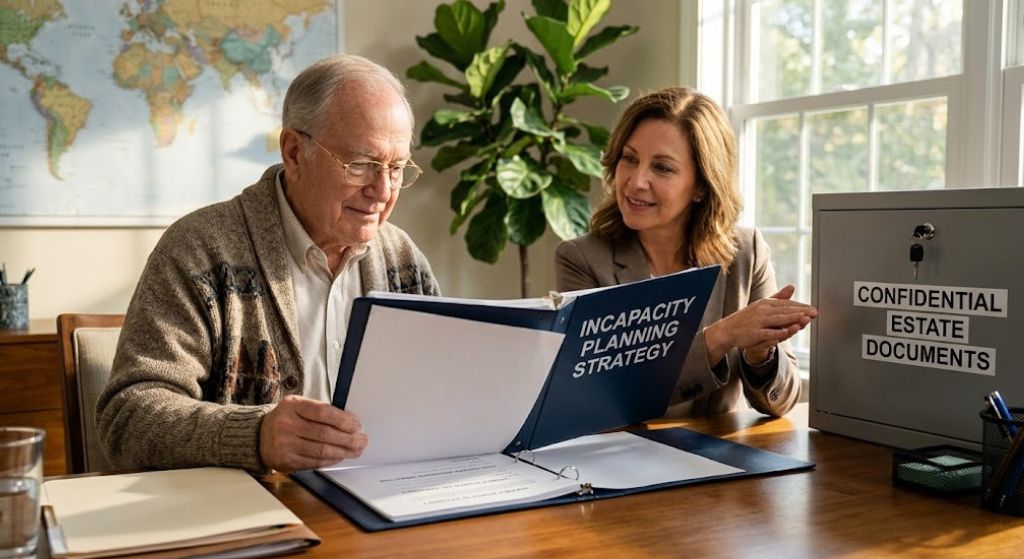
If you own a business, rental property, or both, incapacity planning strategies are not a paperwork exercise. They are your continuity plan for the day you cannot sign, approve, call, or decide, and that day arrives without warning.
For families in Hollywood, Pembroke Pines, Fort Lauderdale, and across Broward and Miami-Dade County, the real risk is not just illness. It is frozen accounts, stalled rent collection, missed payroll, broken lender communications, and a court system stepping in because no one has legal authority to act.
Proactive Incapacity Planning for Local Business and Real Estate Owners
You need a plan that keeps your life moving if your health suddenly changes. That means your family can pay bills, your business can operate, and your property can stay protected without racing to court. It also means you preserve control now, instead of letting a judge decide later who gets to speak for you.
The biggest mistake is waiting until a crisis exposes the gaps. By then, family members are scrambling, banks are asking for documents no one can find, and every delay costs money, time, and leverage. Klein & Fortune, P.A. approaches this as a legal and operational problem, because that is what it becomes the moment you cannot act.
What Incapacity Planning Strategies Actually Protect
Incapacity planning strategies are the legal, financial, medical, and operational steps that keep your affairs functioning if illness, injury, cognitive decline, or another condition stops you from acting on your own. At a practical level, you are protecting authority, access, and continuity. That includes who can pay bills, who can speak to doctors, who can manage property, and who can keep your business from freezing.
For many owners, the goal is simple: preserve autonomy and avoid guardianship. If you already know the basics of incapacity documents, skip ahead to the business and property sections. If not, start here, because this is the foundation for everything else.
Why Local Owners Face Higher Stakes
A wage earner with one checking account has a problem. A business owner with employees, tenants, mortgages, vendor contracts, insurance renewals, and tax filings has a much larger one. One missed signature can disrupt payroll. One missed insurance payment can create a coverage fight. One unreturned lender call can trigger default pressure.
That is why understanding the difference between guardianship and private planning matters so much for local owners. Court involvement slows everything down, adds cost, and removes flexibility. Private planning gives your chosen decision-makers authority before the crisis becomes a legal event.
What Happens When You Have No Plan
Without a plan, your bank may freeze access. Your spouse or adult child may be unable to communicate with doctors. A rental property may sit with a leaking roof because no one can authorize the repair fast enough. Business counterparties do not wait around for family to sort things out.
That is how families end up forced into the Florida guardianship process just to keep life functioning. Probate and guardianship are expensive, public, and slow. Probate can cost 4% to 7% of an estate’s value and may take up to two years. That is not a continuity strategy. That is damage control.
The Core Documents That Keep You Out of Court
The backbone of a real plan is authority. Not vague family understanding, not verbal promises, and not “everyone knows what I want.” You need documents that banks, hospitals, title companies, and business partners will actually accept.
This is where a durable power of attorney becomes the first line of defense. It gives someone you trust authority to step in on financial and property matters while you are alive but unable to act. Without it, every important task becomes harder than it should be.
Durable Financial Power of Attorney
A durable financial power of attorney lets your agent handle banking, taxes, contracts, insurance, entity paperwork, and real estate matters if you become incapacitated. For a business owner, that authority often makes the difference between continuity and shutdown. For a property owner, it keeps repairs, payments, and communications moving.
The key is specificity. A generic form is not enough when you own rental houses, commercial property, or an operating company. Your document should match your assets, your institutions, and your decision-making style.
Health Care Surrogate and Living Will
Medical planning is separate, and it matters just as much. A designation of health care surrogate gives someone authority to speak with doctors and make treatment decisions when you cannot. A living will states your end-of-life preferences so your family does not have to guess under pressure.
You also need a HIPAA authorization so your decision-maker can actually receive information. Without it, the right person may still be locked out of the conversation. If you want the medical side done correctly, your end-of-life directives need to work together, not sit as isolated documents in a drawer.
Revocable Living Trust
A revocable living trust solves a different problem. It lets a successor trustee manage trust assets during incapacity and transfer them at death without probate. For real estate owners, that can keep title, management, and eventual inheritance aligned in one structure.
Do not confuse the trustee with the agent under a power of attorney. They are different roles, with different authority. That distinction matters when you own property in your individual name, your trust, or through an entity. The trust controls trust assets, and the power of attorney controls assets outside the trust.
HIPAA Authorization and Medical Records Access
Medical privacy rules are strict. A spouse, adult child, or sibling does not automatically get access to your records just because the person cares about you. A signed HIPAA authorization removes that barrier and speeds up communication with doctors, hospitals, and specialists.
This is one of the simplest documents to overlook and one of the easiest ways to create chaos. You want the person making decisions to see the full picture, not piecemeal updates through a frustrated nurse at the desk.
Incapacity Planning for Business Owners
Business continuity is where many plans fail. Personal estate planning can be perfect on paper and still leave your company exposed if ownership documents, operating agreements, and succession authority do not match. That gap is where delays and disputes start.
If your business is a sole proprietorship, LLC, partnership, S corporation, or C corporation, your incapacity plan has to fit the entity. The structure matters because the law treats authority differently depending on how the business is owned and managed.
Who Can Sign, Manage, and Pay Bills If You Cannot
The practical question is not theoretical. Who signs the lease renewal? Who approves payroll? Who talks to the CPA? Who responds to a lender’s request for updated financials? If the answer is unclear, your company loses speed.
That is especially true for the many owners who run a business without formal backup systems. A carefully drafted trust-based structure can support continuity, but only if your business documents and ownership records match the trust plan. Otherwise, authority fragments and every counterparty demands proof.
Entity Structure and Succession Authority
Your operating agreement, shareholder agreement, or partnership agreement should name who steps in and what happens during incapacity. If those documents are silent, outdated, or inconsistent with your estate plan, your family inherits confusion instead of clarity.
S corporations and C corporations also bring tax consequences into the picture. The corporate tax rate remains 21%, the top ordinary rate for individuals remains 37% in 2025, and entity choice affects cash flow, deductions, and continuity planning. The right structure is not just about taxes today. It is about preserving control tomorrow.
Buy-Sell Agreements and Successor Management
If you co-own a business, a buy-sell agreement is not optional. It governs what happens when an owner dies or becomes incapacitated, including who can buy the interest, how value is determined, and who controls voting rights during the transition. Without it, co-owners and family members end up fighting over authority.
This is where incapacity planning intersects with ownership succession. A clean agreement prevents a frozen company, a hostile partner situation, and a court battle over who gets to run the business.
Retirement Plans, Tax Structure, and Continuity
Retirement planning is part of continuity planning because it affects compensation, tax exposure, and future liquidity. Retirement accounts now hold more than $48 trillion and represent more than one-third of all household financial assets, so they are not a side issue. They are a major part of your balance sheet.
For owner-operators, current tax rules also affect strategy. The QBI deduction remains 20%, 100% bonus depreciation has been permanently reinstated for qualified property, and domestic research costs can be deducted immediately rather than amortized. Those rules influence how much cash your business keeps available if your family has to step in. A smart owner reviews structure annually, not after a crisis.
Real Estate and Rental Property Considerations
Real estate creates its own incapacity problems because property does not pause while you recover. Mortgages keep coming due. Tenants call. Insurance renewals arrive. Repairs become urgent. If your ownership structure does not give someone clear authority, the property itself becomes a liability.
For families with homestead property, rentals, commercial buildings, or vacant land, guardianship alternatives are often the better path. They keep management private and faster, while preserving your property plan instead of handing it to the court.
Managing Mortgages, Insurance, and Tenant Obligations
A rental house without active management loses value fast. Tenants need repairs. Insurance carriers need timely responses. Mortgage lenders expect payment. Code violations do not wait for a health crisis to pass.
Your successor needs immediate access to lease files, lender contacts, insurance declarations, and property records. If that information sits in your head, or buried in a laptop no one can open, the property becomes harder to protect than it should be.
Title Ownership and Trust Funding
How title is held controls who can manage or sell the property. If the asset sits in your individual name, it usually needs probate at death unless another transfer mechanism exists. If it is in your revocable trust, successor management is much cleaner.
Funding the trust is not optional. The document alone does nothing unless your accounts and deeds are aligned with it. That is where many plans fall apart, especially when owners assume signing the trust finished the job.
Dealing With Records, Closings, and Property Files
Real estate owners tend to accumulate paperwork faster than they realize, closing statements, surveys, title policies, loan files, leases, warranties, and tax records. When incapacity hits, someone has to find those documents quickly.
You do not want your family sorting through boxes and boxes of files while a tenant complains about a broken air conditioner. Organize the records now. Future you will thank you.
How to Organize Your Financial and Digital Access
Legal documents are only half the plan. Access is the other half. If no one can get into your accounts, open your phone, or locate your cloud files, the right legal authority still moves too slowly.
Account Inventory and Asset Map
Start with a complete inventory. List banks, brokerage accounts, retirement plans, loans, mortgages, insurance policies, entity ownership, tax professionals, and recurring obligations. Add where the account is held, who has authority, and what document backs that authority.
A single master inventory turns chaos into a process. It gives your agent or trustee a roadmap instead of a scavenger hunt.
Digital Accounts, Passwords, and Legacy Access
Your business life now lives in email, accounting software, portals, shared drives, and password managers. If nobody can access those systems, bills stall and deadlines slip. That is why digital planning is no longer optional.
Store login instructions securely, name legacy contacts where platforms allow them, and keep your devices unlockable by the person who needs them. That sounds basic, but honestly, basic is what saves time in a crisis.
Centralizing Insurance, Tax, and Entity Records
Your successor should know where to find insurance policies, corporate records, annual reports, operating agreements, prior returns, and CPA contact information. Centralization matters because every professional involved in your plan needs the same version of the truth.
When records are scattered, decisions slow down. When records are organized, your agent, trustee, attorney, and accountant can act as a unit.
Family Instructions and Successor Coordination
A strong plan also reduces family conflict. Clear instructions prevent siblings from arguing, adult children from second-guessing each other, and blended families from drifting into resentment. The right decision-makers need both authority and direction.
Choosing the Right Decision-Makers
Choose people who are available, organized, and calm under pressure. Trust matters, but competence matters too. A thoughtful adult child who lives across the country may not be the right person to manage a local rental portfolio if day-to-day action is needed.
If you want a practical model for family decision-making, Florida law gives you ways to choose in advance before a court imposes someone later. That choice preserves your voice while you still have it.
Communicating Your Plan Before a Crisis
Do not hide the plan. Tell your decision-makers where the documents are, what they control, and which professionals to call first. A brief family meeting now prevents a long fight later.
Your successors do not need every detail of your finances. They do need enough context to act without guesswork. Silence creates fear, and fear creates conflict.
Special Planning for Adult Children, Blended Families, and Dependents
If you have adult children, a blended family, or a dependent parent, your incapacity plan has to be precise. Family dynamics do not improve under stress. Clear authority and clear instructions stop old grievances from becoming legal disputes.
If a dependent loved one needs ongoing support, build that into the plan now. If the family arrangement is complicated, assume confusion will happen unless the documents make the answer obvious.
Common Mistakes That Break Incapacity Plans
The most common failure is partial planning. People sign one document, then assume everything else will work itself out. It will not.
Another common mistake is mixing old documents with new life facts. Marriage, divorce, new property, a new entity, or a health diagnosis can make yesterday’s plan unsafe today. Your documents have to keep pace with your life.
Relying on a Single Document
A power of attorney is not enough by itself. A trust is not enough by itself. A living will is not enough by itself. Each tool solves a different problem, and the documents need to work together.
That is why planning for court intervention in Florida is the wrong starting point. You want to prevent the hearing, not prepare for it after the damage is done.
Outdated or Inconsistent Documents
If your operating agreement names one successor but your power of attorney names someone else, the result is delay. If your trust owns some assets but your accounts still sit in your individual name, the result is probate exposure. If your beneficiaries are outdated, the result is a legal mess.
Review every document after major life and business events. That includes marriage, divorce, property purchases, business formation, refinancing, and health changes.
Failing to Fund the Trust or Transfer Authority Correctly
A signed trust without funded assets is an empty shell. A power of attorney that a bank refuses to honor is a liability. A health document nobody can find is useless in an emergency.
You need execution, not just intention. That is the difference between a plan that looks good and a plan that actually works.
Ignoring Florida Formalities
Florida law is not casual about capacity, signatures, witnesses, and document validity. A form pulled from the internet can fail at the exact moment your family needs it most. That is a costly mistake.
When someone finally asks whether a document is valid, the court appointed guardian process is already in the picture. Good planning keeps you out of that box.
When Guardianship Becomes the Problem You Must Avoid
Guardianship strips decision-making from your hands and places it under court supervision. It is public, slower, and far more expensive than private planning. Once a guardianship is filed, even good family intentions have to run through the court’s rules.
If you want a better outcome, you start earlier. That is the point. Proactive incapacity planning strategies preserve autonomy before anyone starts asking a judge to intervene.
Signs Your Current Plan Is Not Enough
If your accounts are not titled correctly, if you have no HIPAA release, if your successors do not know where your documents are, or if your business agreements never addressed incapacity, your plan is incomplete. If your family would need a court order to handle ordinary life, your plan is failing.
For adult children caring for aging parents, the legal burden escalates quickly once records, authority, and care decisions are tangled. The cleaner the plan, the less likely family conflict becomes a legal event.
How Early Planning Preserves Autonomy
You do not wait for a fire to buy insurance. Incapacity planning works the same way. The earlier you complete it, the more choices stay in your hands and the less your family has to guess.
That is the real advantage: control, speed, privacy, and lower cost.
Your Step-by-Step Incapacity Planning Checklist
Start with your assets, entities, and recurring obligations. Then match each one to the person and document that can actually act. If a bank account, property, or business role has no clear backup, you have found a gap.
Next, build the legal structure around those gaps. Your power of attorney, trust, medical directives, and business agreements should all point in the same direction. That is how you turn isolated documents into a functional plan.
Then name backups and write down instructions. Keep the plan updated annually and after major life changes, because a stale plan is only slightly better than no plan at all.
Frequently Asked Questions
What are incapacity planning strategies in plain English?
They are the legal and practical steps that let someone manage your money, medical care, business, and property if you cannot. The goal is to keep life moving without forcing your family into court.
Do you need both a power of attorney and a living trust?
Yes, for most owners. A power of attorney handles assets outside the trust and daily financial authority, while the trust manages trust-owned assets and can avoid probate at death.
Can a spouse automatically handle everything if you become incapacitated?
No. A spouse does not automatically receive access to every account, document, or medical record. Proper documents are still needed to make authority clear.
What happens if your business documents do not address incapacity?
Your company can stall. Banks, vendors, employees, and co-owners may refuse to act without clear authority, which is how simple problems become expensive ones.
How often should you review your incapacity plan?
Review it every year and after marriage, divorce, a new property, a new business, a refinance, or a major health change. If your life changed, your plan should too.
Is guardianship avoidable with proper planning?
Yes, often. Proper incapacity planning strategies, paired with aligned titles, beneficiary designations, and business documents, keep decision-making private and out of court.
A strong incapacity plan is not about paperwork. It is about control, continuity, and making sure your family, business, and property do not stop because you do.
References
- absolutetrustcounsel.com
- attorneyoffice.com
- baronlawcleveland.com
- brillantlaw.com
- estateplanning.com
- estateplanning.com
- estateplanning.com
- estateplanning.com
- info.wealthcounsel.com
- info.wealthcounsel.com
- info.wealthcounsel.com
- info.wealthcounsel.com
- info.wealthcounsel.com
- info.wealthcounsel.com
- info.wealthcounsel.com
- key.com
- kpmg.com
- likelawgroup.com
- lionswealth.com
- squillace-law.com