
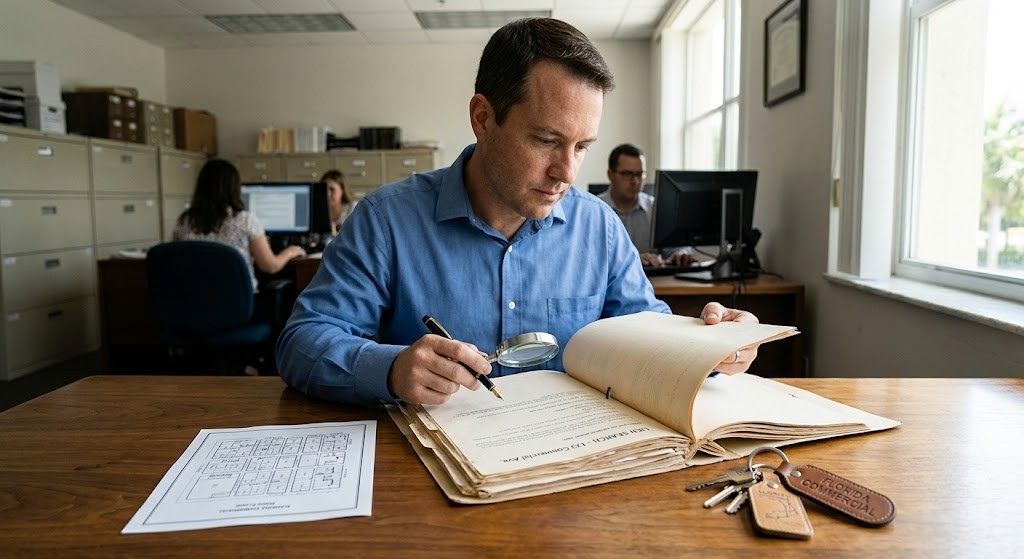
A Florida Commercial Property Lien Search can save you from the kind of surprise that shows up three days before closing and wrecks the whole schedule. A site in Hollywood can look perfectly fine on the surface, while old code fines, unpaid utility balances, or permit problems sit quietly in the background.
What a Florida Commercial Property Lien Search helps you catch
Title due diligence is not just about seeing who owns the property. It is about spotting claims that can attach to the site and follow the deal. In Broward County, that can include recorded liens, municipal charges, open permits, and code enforcement issues that do not always show up in a basic title file.
What you’ll need before you start
Get your file straight before you search. You want the property address, legal description, parcel or folio number, seller name, and any title commitment or prior lien report already in hand.
Gather the property identifiers
Start by confirming the exact property details. A wrong suite number or a mismatched folio can send you into the wrong record set, and then every result after that is suspect.
Know which jurisdictions touch the property
Check the city and county first, then note any special district. A commercial parcel in Fort Lauderdale may involve city records, Broward County records, and separate utility or district data.
Step 1: Check the recorded public records
- Search Broward County official records by owner name and property details.
- Look for mortgages, judgments, notices, and recorded liens.
- Check court filings tied to the owner if the title file raises a question.
Review official records and court filings
A recorded lien is simply a claim filed in public records. This first pass catches the obvious problems, which is exactly where you want to start.
Step 2: Order municipal and unrecorded lien searches
- Request municipal lien and utility searches from the right local offices.
- Review open balances, special assessments, and department responses.
- Compare response dates so nothing is stale by closing.
Include permit and code enforcement checks
Permit history and code cases often reveal the mess behind the fridge. If repairs were started and never closed out, or fines are still running, you need to know before signing.
Step 3: Compare the lien results against the title file
- Match each search result to the title commitment, survey, and contract.
- Flag duplicate items, missing releases, or entries that do not belong.
- Note anything that needs follow-up before escrow moves forward.
Step 4: Verify payoff, release, or cure requirements
- Confirm payoff amounts and release terms with the issuing office.
- Get written proof for anything marked satisfied or disputed.
- Track cure items that must be completed before closing.
If a lien is not resolved, clear title is not happening.
Step 5: Build your closing checklist and next move
- Create a list of every item that needs payment, release, or update.
- Set deadlines for fresh lien letters and final confirmations.
- Make sure closing agents have the latest documents before signing day.
Troubleshooting common issues
Owner name variations, missing parcel data, and stale municipal responses are common. The fix is usually simple: go back to the legal description, confirm the folio, and request updated letters.
What you should expect after the search
By the end, you should have a cleaner view of title risk and a tighter closing file. Try one simple thing first: pull the parcel details before anything else, then run the lien search against the right property record.