
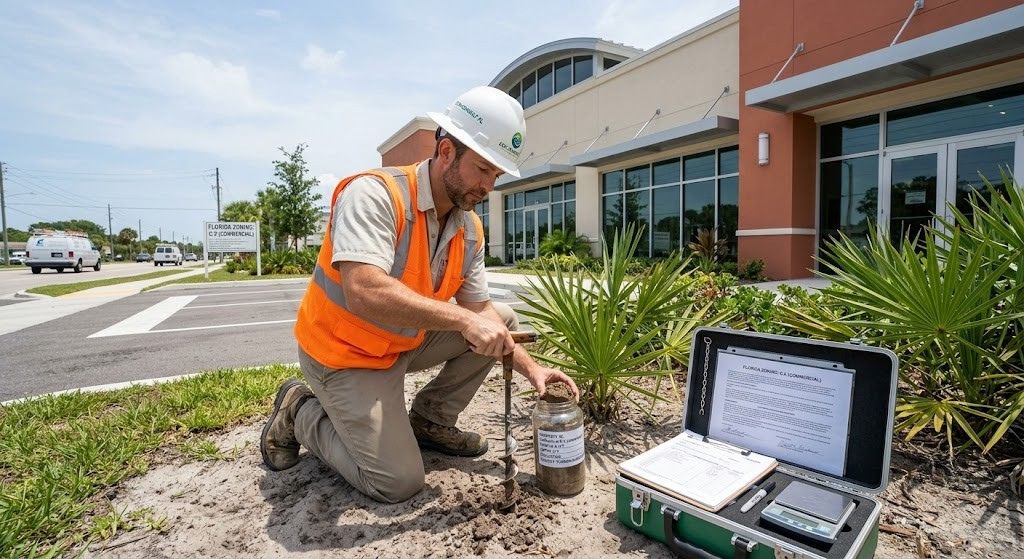
Buying commercial property can feel clean on paper and still hide a very dirty problem underground. Florida Commercial Property Environmental Due Diligence helps you catch that problem before it turns into cleanup costs, lender delays, or a deal you wish you had never signed.
What Florida commercial property environmental due diligence actually covers
Environmental due diligence is the part of your deal where you look past square footage, rent rolls, and title work to find contamination risk, permit issues, and property conditions that can follow ownership. In plain English, you are checking whether the site comes with environmental baggage.
That baggage can take a few forms. Sometimes it is obvious, like a former gas station or a stained loading area behind an old warehouse. Sometimes it is quieter, like a closed cleanup case with ongoing monitoring, a buried tank no one mentioned, or runoff from a neighboring property. The point is simple: if you buy the site, you may also buy the consequences.
This review matters in Broward County because commercial corridors in Hollywood and Fort Lauderdale often have long use histories packed into tight areas. A building that is now an office or retail strip may have been auto repair, light industrial, or dry cleaning twenty years ago. Old uses tend to leave long memories in soil and groundwater.
What you’ll need before you start
Before you order reports, get your timing and paperwork under control. Environmental review works best when it starts early and moves with the rest of your deal, not after everything else is already lined up.
Your contract timeline and due diligence period
Your inspection window is your leverage window. If your contract gives you 30 days, environmental work needs to start right away, because a Phase I Environmental Site Assessment, often called a Phase I ESA, takes time to order, schedule, inspect, and review.
If the report raises concerns, extra testing may be needed before your deadline expires. That is where deals get pinched. Waiting until day 23 to start is like noticing a roof leak after the furniture is already inside.
Basic property records and seller disclosures
Start by gathering prior environmental reports, surveys, permits, site plans, certificates of occupancy, and any seller disclosures about tanks, spills, violations, or past operations. Also ask for records tied to cleanup, monitoring, asbestos, lead-based paint for older structures, and stormwater systems if the site had industrial use.
Even incomplete files help. A missing report can be a clue by itself, especially if the property has a use history that normally produces paperwork.
The right team for a Florida commercial deal
You need an environmental consultant, a real estate attorney, lender contacts, and title professionals lined up early. Each one sees a different part of the risk.
Your consultant investigates the site. Your attorney helps translate findings into contract rights, access agreements, extensions, and risk allocation. Your lender may require a current Phase I ESA before funding. Title professionals help catch recorded restrictions or notices that affect how the property can be used later.
Step 1: Screen the property for obvious environmental red flags
Before spending more money, do a quick first pass. This will not replace a proper assessment, but it helps you spot properties that deserve closer attention fast.
- Review the listing, tax record, and current site use.
- Check aerial imagery and older map sources for past uses.
- Drive the property and surrounding blocks.
- Note visible stains, vent pipes, fill ports, drums, distressed pavement, or odd drainage.
- Compare what you see with what the seller says.
If the site looks ordinary but has a not-so-ordinary history, that gap matters.
Check current and past property uses
Certain uses deserve immediate attention: gas stations, dry cleaners, auto repair shops, machine shops, manufacturing, printing, chemical storage, and properties with large dumpsters or wash areas behind the building. Even former agricultural or nursery uses can raise pesticide and fill questions.
Past use matters just as much as current use. A polished storefront in Fort Lauderdale today may sit on land that handled solvents in the 1990s. Businesses change. Contamination often stays put.
Look at the surrounding area, not just the parcel
Contamination does not stop at the fence line. Check adjoining properties, uphill and upgradient sites, nearby canals, and drainage flow. If a neighboring parcel handled fuel, solvents, or industrial waste, that risk can migrate.
This comes up often in dense commercial strips where multiple older businesses sat side by side for years. One parcel can look spotless while the problem started next door.
Flag Florida-specific concerns early
South Florida adds a few local wrinkles. Watch for underground storage tanks, flood-prone areas, wetlands, questionable fill material, and stormwater issues. High groundwater can complicate both testing and cleanup.
In Broward County, drainage patterns and coastal conditions matter more than many buyers expect. A site that looks dry at noon can tell a different story after a summer storm.
Step 2: Order a Phase I Environmental Site Assessment
Once the property passes your first screen, order a Phase I ESA quickly. This is the backbone of environmental due diligence in most commercial deals.
- Hire a qualified environmental consultant.
- Confirm the report will meet current ASTM standards and All Appropriate Inquiries requirements.
- Provide the consultant with the contract timeline and available property records.
- Schedule site access immediately.
- Ask for draft timing early enough to react before deadlines.
What a Phase I ESA includes
A Phase I ESA usually includes a records review, site inspection, historical research, and interviews. The consultant looks at regulatory databases, old aerials, fire insurance maps when available, city directories, and visible site conditions.
The goal is to identify recognized environmental conditions, often shortened to RECs. That phrase sounds technical, but it simply means signs that contamination may exist, may have existed, or may pose a threat because of a release.
Why timing matters for liability protection
A current Phase I ESA can help support federal liability defenses tied to All Appropriate Inquiries. That matters because ownership alone can trigger exposure under CERCLA, the main federal cleanup law.
The catch is simple: stale reports are weaker. If you are relying on a report prepared for someone else months ago, your protection may have holes. Fresh work is safer.
How to choose a consultant who knows South Florida
Choose a consultant with commercial deal experience in South Florida, not just general environmental experience. Local familiarity helps with old industrial corridors, tank history, county records, drainage patterns, and the kinds of land use shifts that show up around Hollywood and Fort Lauderdale.
Turnaround time matters too. So does clarity. A good consultant writes in plain English, flags what is real, and does not bury the important point on page 47.
Step 3: Review the Phase I findings and decide what they mean for your deal
A Phase I report is not just a file for closing. It is a decision tool.
- Read the executive summary first.
- Identify any RECs, historical RECs, or controlled RECs.
- Compare findings with your intended use and lender requirements.
- Talk through the report with your consultant and attorney.
- Decide whether the deal stays on track, needs more testing, or needs renegotiation.
Separate routine notes from real warning signs
Not every comment in a Phase I report means danger. Minor housekeeping issues, like poor labeling or small maintenance concerns, are different from signs of a release, distressed vegetation, stained soil, or a former tank area.
You do not want to panic over every notation. But you also do not want to treat a serious red flag like background noise.
Understand common Phase I outcomes
Some reports find no recognized environmental conditions. That is the cleanest result and usually supports moving forward. Some identify historical concerns that were addressed and closed. Some flag controlled issues, meaning contamination was managed but restrictions or monitoring still apply.
The more serious result is a recommendation for Phase II testing. That means the consultant found enough smoke to justify checking for fire.
Match the findings to your business plan
A flagged condition may hit differently depending on your plan. If you are buying for long-term passive use, a manageable restriction might be acceptable. If you want redevelopment, excavation, financing, or owner occupancy, the same issue can become expensive fast.
The trick is to judge the property based on what you need it to do, not on whether the report feels scary.
Step 4: Move to Phase II testing when the Phase I raises concerns
Phase II testing is targeted sampling. You move here when the Phase I points to a real question that needs an actual answer.
- Confirm exactly which concern triggered testing.
- Narrow the sampling scope to that concern.
- Get site access and seller consent in writing.
- Coordinate timing with the lender and contract deadlines.
- Review results before making closing decisions.
When Phase II is the right next step
Phase II usually makes sense when there is evidence of suspected tank releases, chemical use history, stained soil, strong odors, or groundwater risk. It is also common when records and site observations do not line up.
You do not need testing just because a property is old. You do need it when the Phase I identifies a plausible contamination pathway.
What Phase II testing can involve
Testing may include soil sampling, groundwater sampling, or vapor intrusion review if chemicals could affect indoor air. Each test answers a specific question. Is contamination present in the ground? Has it reached groundwater? Could vapors enter the building?
That focused approach keeps costs more controlled than random drilling.
How to budget for extra investigation
Phase II work adds cost, access coordination, and time. Budget not just for the initial round but for follow-up if results are mixed or incomplete. One boring location may lead to another. One lab result may raise a new question.
That is frustrating, but it is better than closing blind.
Step 5: Check regulatory, permitting, and compliance issues tied to the site
Contamination is only part of the picture. A property can be physically clean and still come with agency problems.
- Search agency records and case files.
- Review permits tied to current or former operations.
- Check for open violations or notices.
- Confirm whether cleanup obligations remain active.
- Fold those findings into your contract and closing review.
Search state, local, and federal records
Look for environmental records through the Florida Department of Environmental Protection, EPA resources, and county or municipal files where applicable. Useful starting points include FDEP’s OCULUS document system and EPA tools such as Envirofacts.
You are looking for violations, discharge reports, cleanup files, enforcement notices, and site identifiers that match the property or nearby parcels.
Review stormwater, wastewater, and hazardous materials compliance
Active and former industrial properties may have stormwater permits, wastewater approvals, hazardous material handling records, or operational files that matter after closing. A site can look fine during a walkthrough and still carry compliance issues that cost time and money to fix.
Paperwork problems are still problems.
Confirm whether prior cleanup obligations still attach
Some sites have ongoing monitoring, engineering controls, or land use restrictions that survive closing. Florida programs can leave obligations tied to how the property is used or maintained, even after formal cleanup milestones. Florida’s cleanup program information gives a useful frame for how these cases can continue over time.
If the site depends on a cap, a vapor system, or restricted groundwater use, you need to know that before you commit.
Step 6: Evaluate liability, lender requirements, and insurance options
Environmental findings affect more than cleanup. They can change your financing, legal exposure, and resale path.
Know how environmental liability can follow ownership
Under some laws, ownership itself can create responsibility for contamination, even if you did not cause it. That is why due diligence is not optional busywork. It is your chance to avoid stepping into somebody else’s mess with both feet.
Coordinate with your lender early
Many lenders want a current Phase I ESA, and some require updates or Phase II testing before funding. If your lender learns about an environmental concern late, closing can slow down fast.
Keep lender contacts in the loop as soon as findings start to shift.
Consider environmental insurance where it fits
Environmental insurance can help in the right deal, especially when some residual risk remains after investigation. It is not a magic eraser. It works more like a seatbelt, useful when you cannot remove every unknown but still want a reasonable layer of protection.
Step 7: Use the findings to renegotiate, require cleanup, or walk away
Information only helps if you act on it before your deadlines run out.
- Request missing documents and testing access.
- Ask your consultant to explain likely cost and scope.
- Decide what risk the seller should keep.
- Renegotiate business terms if needed.
- Walk away if the site stops making sense.
Ask for seller documents, testing access, or remediation plans
If concerns appear, ask for old reports, agency letters, tank records, permits, and cleanup plans. You can also request access for targeted testing or clarification from prior consultants.
The goal is not more paper for the sake of paper. The goal is enough clarity to make a clean decision.
Renegotiate price, credits, escrows, or contract terms
If contamination or compliance issues are real but manageable, shift the economics. That may mean a lower purchase price, seller credits, escrow holdbacks, post-closing obligations, or stronger representations in the contract.
If contamination is the leak in the boat, this is where you decide who pays for the patch.
Know when walking away is the smartest move
Some properties cross the line from opportunity into distraction. If the contamination picture is unclear, cleanup costs are open-ended, lender support is shaky, or the site no longer fits your plan, walking away can be the best outcome available.
Protecting your time matters too.
Step 8: Document everything and preserve your records for closing and beyond
Good environmental files save headaches later. During resale, refinancing, or an agency inquiry, organized records make you look prepared instead of surprised.
Keep reports, correspondence, and approvals organized
Store reports, consultant emails, agency communications, testing results, approvals, and contract amendments in one central file. Digital is fine. Just keep it searchable and complete.
A neat file room is not glamorous, but it beats a scavenger hunt three years later.
Carry forward any ongoing obligations after closing
If the property has monitoring schedules, use restrictions, maintenance duties, or reporting requirements, calendar them immediately after closing. Ownership is not the finish line if the site comes with environmental strings attached.
Missed follow-up can create fresh problems even on an old case.
Common problems and how to fix them
Environmental review rarely goes in a perfectly straight line. The usual trouble spots are manageable if you catch them early.
The seller has no old reports or records
If the file cabinet is empty, lean harder on historical research, interviews, regulatory review, and a properly scoped Phase I ESA. Lack of records does not prove contamination, but it does remove a layer of comfort.
The Phase I recommends more testing right before deadlines
Move fast. Ask for an extension, narrow the testing scope to the highest-risk area, and hold off on final closing steps until you have answers. A rushed yes is usually worse than a short delay.
Sampling finds contamination, but nobody knows the full extent yet
Do not close based on guesswork. Get an estimate for follow-up investigation, understand likely cleanup pathways, and decide whether the seller will handle the issue, fund an escrow, or lower the price enough to justify the risk.
Local conditions raise extra questions in Broward County
Sites in Fort Lauderdale, Hollywood, and nearby corridors can get complicated because of shallow groundwater, drainage systems, coastal influence, and tight neighboring uses. When local conditions raise questions, push for sharper follow-up, not softer assumptions.
What a good outcome looks like and what to do next
A good outcome is not always a clean report. It is enough clarity to close with confidence, renegotiate from strength, or walk away without regret. Try one move first, and do it early: get your Phase I ESA lined up the moment your contract clock starts.