
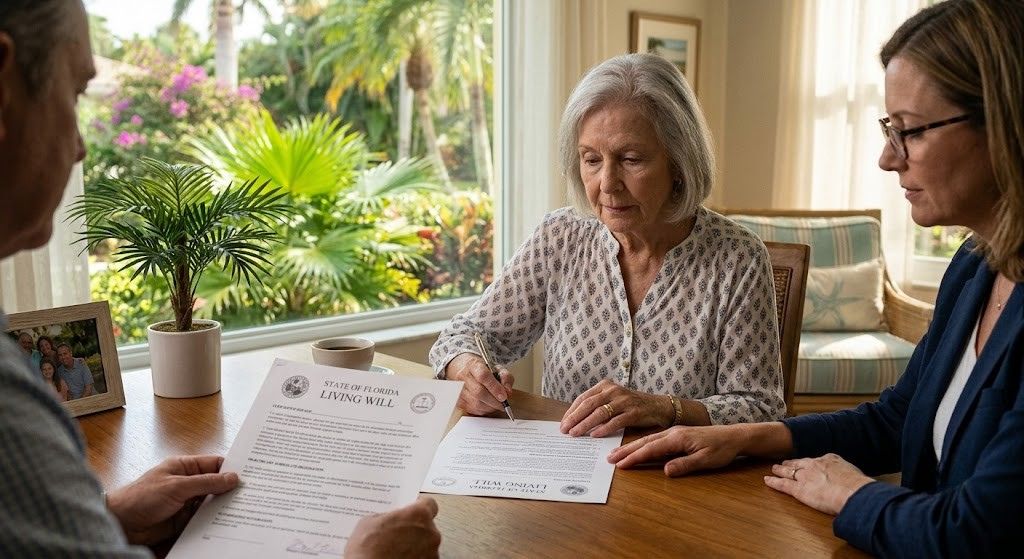
Living Wills Florida gives you control over end-of-life care before a medical crisis takes that control away. If you want your treatment wishes respected, and you want your family to avoid confusion, conflict, and court involvement, you need to understand how a living will works, how it differs from guardianship, and how Florida’s healthcare directives fit together.
What a Living Will Means in Florida
A living will in Florida is a written advance directive that tells doctors what end-of-life treatment you want, or do not want, if you cannot communicate. It is a tool for preserving autonomy. You are not giving up control, you are exercising it while you still have it.
That distinction matters. A lot of people think a living will is only for the very end, but it is really about making your medical wishes known before a crisis forces someone else to guess. In that sense, it works like a written set of instructions for a moment when you cannot speak for yourself.
How a Living Will Differs From Guardianship
A living will is your own decision, made while you are competent. Guardianship is a court process that can remove or limit your decision-making rights after incapacity is found. One is planning. The other is substitution.
That difference is the heart of the issue. A living will says, “Here is what I want.” Guardianship says, “A judge has decided who will decide for you.” Florida law prefers the least restrictive alternative, which means a valid advance directive should come before court control whenever possible.
Why Families in Broward and Miami-Dade Need This Distinction
In Hollywood, Pembroke Pines, Fort Lauderdale, and nearby communities, adult children often find themselves in emergency rooms trying to interpret a parent’s wishes with no clear instructions in hand. That is where disputes start. One child wants everything done, another remembers a casual conversation about comfort care, and the hospital needs an answer now.
A properly drafted living will reduces that pressure. It also helps protect family assets by reducing the odds that a medical crisis spills into a guardianship case. For many families, this is where understanding the Florida guardianship process becomes just as important as understanding the medical side.
Florida’s Advance Directive System
Florida does not treat end-of-life planning as a single document. The state recognizes a broader advance directive system that includes a living will, a health care surrogate designation, and anatomical donation. Together, these healthcare directives cover both treatment preferences and decision-making authority.
No advance directive is legally required in Florida, but that does not make planning optional in practice. Without documents in place, others step into the gap, and that gap often becomes a family fight.
The Three Advance Directives Florida Recognizes
The living will states your treatment wishes. The health care surrogate designation names the person who speaks for you. Anatomical donation directs what happens to organs, tissue, or your body after death.
Each document serves a different purpose, and each one solves a different problem. A living will gives instructions, a surrogate designation gives authority, and anatomical donation handles post-death decisions. For a closer look at naming the right decision-maker, see why a trusted surrogate designation matters before a crisis.
Living Will
This document tells doctors whether you want life-prolonging procedures withheld, withdrawn, or provided when you are in a terminal condition, end-stage condition, or persistent vegetative state. It is specific by design.
Health Care Surrogate Designation
This document names a person to make medical decisions for you if you cannot speak for yourself. Florida does not require you to be incapacitated to sign one. That is a smart feature, because planning should happen while your judgment is still intact.
Anatomical Donation
You can also direct organ, tissue, or body donation. Many people handle this in the same planning conversation because it belongs to the same category of end-of-life choices. Leaving it vague forces someone else to decide under stress.
No Advance Directive Is Legally Required, But Planning Still Matters
Florida does not force you to create an advance directive. That sounds harmless until a hospital asks who has authority to speak, and nobody can answer with confidence. Then the decision may shift to a spouse, adult child, parent, sibling, other relative, close friend, or court-appointed guardian.
That is exactly how avoidable guardianship starts. If a person is already in crisis, a family often needs emergency temporary guardianship just to make immediate decisions. Planning ahead prevents that scramble.
What Your Living Will Can Cover
A strong living will does not rely on generalities. It addresses the treatments that matter most when the body is failing and the family is under pressure. Specificity wins here, because vague language leaves doctors and loved ones guessing.
Life-Prolonging Procedures
Your living will can direct whether life-prolonging procedures should be used, continued, or stopped. That includes the classic interventions most people think about when they hear end-of-life care, but the actual scope can be broader than many realize.
Common Medical Treatments You Can Address
A well-drafted directive can address CPR, mechanical ventilation, tube feeding, dialysis, antibiotics, antivirals, pacemakers, ICDs, comfort care, and palliative care. It can also reflect preferences about organ and tissue donation or donation of the body for scientific study (Mayo Clinic).
The practical point is simple. You are not just saying “do everything” or “do nothing.” You are drawing lines around treatment so your wishes match your values.
Comfort Care and Palliative Care
A living will can prioritize comfort, pain relief, and dignity even when cure is no longer the goal. That matters more than most people expect. Families often equate comfort care with “giving up,” but legally and medically it means something more precise: treating suffering while honoring the limits you set on aggressive intervention.
How Florida Law Makes a Living Will Valid
Florida gives you sample forms, but a form is only the starting point. Validity depends on how the document is signed, witnessed, and understood. If those details are wrong, the document becomes a source of argument instead of guidance.
You Must Be a Competent Adult
You must be competent when you sign. That means you understand the nature of the document and the choices you are making. Capacity is not about whether your family agrees with your choice. It is about whether you understand it.
Two Witnesses Are Required
Florida requires two witnesses. At least one witness cannot be your spouse or blood relative. That rule exists to reduce pressure, conflict, and claims that someone in the family engineered the document.
Florida Provides Sample Forms, But Form Alone Is Not Strategy
Florida’s sample forms are helpful, but they do not replace careful drafting. Your living will should coordinate with your surrogate designation, your broader estate plan, and any other incapacity documents you already have. That is especially true for Florida Revocable Living Trust planning, where medical authority and asset authority need to work in different lanes without colliding.
Why a Health Care Surrogate Is Often the Missing Piece
A living will works best when a trusted person can carry it out in real time. Without that person, the document can sit in a chart while doctors and family members debate what it means. The surrogate gives the directive a voice.
What a Surrogate Actually Does
Your surrogate talks to doctors, confirms your wishes, and makes decisions when your living will does not answer every question. That matters because medical situations are messy. Not every choice is written in advance, and your surrogate fills the gap using your stated preferences as the guide.
Choosing the Right Person Matters
Pick someone calm, available, firm under pressure, and willing to stand up to family conflict. The wrong choice is someone who avoids hard conversations or caves when emotions run high. The right choice is someone who can advocate for your wishes without drifting into personal preference.
A Living Will Without a Surrogate Creates Gaps
A living will alone does not solve every bedside problem. Doctors may need quick clarification, and family members may interpret the same sentence in different ways. That is why a directive should sit inside a full plan, not stand alone. A coordinated package often includes a durable power of attorney for Florida families and related incapacity documents.
When a Living Will Takes Effect
Your living will does not control ordinary care while you are able to make your own medical decisions. It activates when you lose the ability to decide and communicate for yourself. That trigger is what separates planning from day-to-day treatment.
Incapacity and the Physician’s Role
Florida’s framework ties incapacity to a physician’s determination. Only the primary physician can determine incapacity for this purpose. Once that happens, your living will speaks for you.
Why Timing Matters
The document only works if it exists before the crisis, is accessible during the crisis, and is known to the people who need it. A signed directive locked in a drawer helps nobody. A clear directive shared with the right people changes the outcome.
How Guardianship Differs From Advance Planning
Guardianship is a court-supervised substitute system. Advance directives are your own pre-crisis instructions. That is not a small difference, it is the difference between keeping control and having a judge decide how control is divided.
What a Court-Appointed Guardian Can Do
A court-appointed guardian may receive authority over medical or personal decisions, and sometimes broader rights, after a judge finds incapacity. In a contested case, that process can get expensive and deeply personal very quickly.
Rights That Can Be Limited or Removed
Florida guardianship can limit important rights, including medical decision-making and other personal choices. The court does not take that step lightly, but it does take it when no effective planning exists or when conflict makes a less restrictive alternative impossible.
Florida Prefers the Least Restrictive Alternative
Florida law favors the least restrictive alternative. That means a living will, surrogate designation, and related estate planning documents should be used before guardianship becomes necessary. If you want to see how the court process works when planning is absent, review the rules that govern guardianship in South Florida.
What Happens If You Do Not Have a Living Will
If you do nothing, you do not stay in control by default. You leave the decision to someone else. That someone may be loving and well-intentioned, but loving people make conflicting choices when the stakes are high and the instructions are unclear.
Who Makes Decisions Without a Directive
Without a directive, decision-making can fall to a spouse, adult child, parent, adult sibling, adult relative, close friend, or a court-appointed guardian. The order of authority depends on the circumstances, and that uncertainty is exactly the problem.
Why Families End Up in Conflict
Families fight when nobody knows the plan. One person sees treatment as hope, another sees it as suffering, and both may claim to be honoring your wishes. A living will removes guesswork and lowers the emotional temperature in the room.
Why “No Document” Is Not a Neutral Choice
Silence is not neutrality. It is a transfer of power to whoever is standing closest when the crisis hits. If you want to preserve autonomy, avoid unnecessary court involvement, and keep your family aligned, doing nothing is the wrong strategy.
Keeping Your Living Will Useful Over Time
A living will should not be signed and forgotten. It should be easy to find, easy to understand, and easy to update. That is how a legal document stays useful instead of symbolic.
Where to Keep Copies
Give copies to your surrogate, primary physician, attorney, and key family members. Keep the original in a secure but reachable place, not in a location that forces your family to guess during an emergency. A card in your wallet or phone note that says you have directives and where they are stored also helps.
When to Review and Update
Review the document after major health changes, family changes, or major life events. If the form is old, that alone is a reason to revisit it. People change, medical technology changes, and your wishes deserve to keep up.
Why Communication Is Part of the Plan
The best document in Florida still fails if nobody knows what it says. Tell your surrogate exactly what matters to you, then make sure the family understands that your instructions are not a suggestion. They are the plan.
Common Questions About Florida Living Wills
Can You Change or Revoke a Living Will?
Yes. While you remain competent, you can revise or revoke your living will. The latest valid document should control, so keep your records current and distribute updated copies.
Will Another State’s Living Will Work in Florida?
Florida can honor an advance directive created in another state if it was valid under that state’s law. Even so, a Florida review helps prevent problems with wording, witnesses, and local medical practice.
Do You Need a Lawyer to Make One?
Florida provides sample forms, so a lawyer is not required. But legal guidance helps you coordinate the living will with your surrogate designation, durable power of attorney, and broader plan so the documents work together instead of separately.
What If You Cannot Sign Your Name?
Florida law provides alternatives when someone cannot sign a document personally. That is another reason to handle healthcare directives before health declines, because proper execution still matters.
Does a Living Will Cover Financial Decisions Too?
No. A living will addresses medical treatment, not money or property. If you want someone to manage accounts, bills, or assets, you need separate planning, often through guardianship alternatives that protect your independence and related incapacity documents.
What If Family Members Disagree About Your Wishes?
Your written directive, paired with a clearly chosen surrogate, controls the conversation. If the document is vague or unavailable, disagreement becomes much more likely, and that is where guardianship fights begin.
How Living Wills Fit Into a Complete Florida Estate Plan
A living will is one piece of a larger strategy. It protects your medical autonomy, but it does not handle property, bills, or every decision a crisis creates. Complete planning connects healthcare directives with financial authority and asset protection.
Pairing a Living Will With a Durable Power of Attorney
Medical authority and financial authority are separate. Your living will speaks to treatment. Your durable power of attorney gives someone authority over money and property. If you want the full picture of incapacity planning, these tools belong together.
Why Families Should Coordinate Health and Property Planning
A health crisis often exposes weaknesses in the rest of the estate plan. If nobody can pay bills, manage real estate, or communicate with institutions, the family ends up in court even if the medical wishes are clear. That is why incapacity planning strategies for owners and families matter for homes, accounts, and business interests alike.
The Strategic Goal: Preserve Autonomy and Avoid Unnecessary Guardianship
The point of living wills Florida families rely on is not simply avoiding medical intervention. It is protecting control, reducing conflict, and keeping the family out of avoidable court proceedings. At Klein & Fortune, P.A., that means building a complete package of healthcare directives and related documents that reflect your wishes and hold up when they are needed most.
Frequently Asked Questions
What is the main difference between a living will and guardianship?
A living will is your own instruction made while you are competent. Guardianship is a court process that can limit or remove decision-making rights after incapacity is found.
Does Florida require a living will?
No. Florida does not require one, but without it you leave medical decisions to others, and that often leads to conflict or court involvement.
Can a health care surrogate override a living will?
No. A surrogate is supposed to carry out your written wishes, not replace them. The surrogate fills gaps when the document does not answer every question.
Are witnesses required for a Florida living will?
Yes. Two witnesses are required, and at least one witness cannot be your spouse or blood relative.
Should a living will be part of a larger estate plan?
Absolutely. A living will should coordinate with a health care surrogate designation, durable power of attorney, and other incapacity planning documents so your medical and financial affairs stay aligned.
Can you still make a living will if you are healthy?
Yes. In fact, that is the right time to do it. Advance directives are most effective when created before any question about capacity exists.
Understanding Living Wills Florida means understanding one simple rule: write your wishes down while you still can, and pair them with the person who will enforce them. That is how you preserve autonomy, reduce family conflict, and avoid turning a medical crisis into a guardianship case.
References
- dhclaw.com
- mayoclinic.org
- quality.healthfinder.fl.gov
- scholarship.stu.edu