
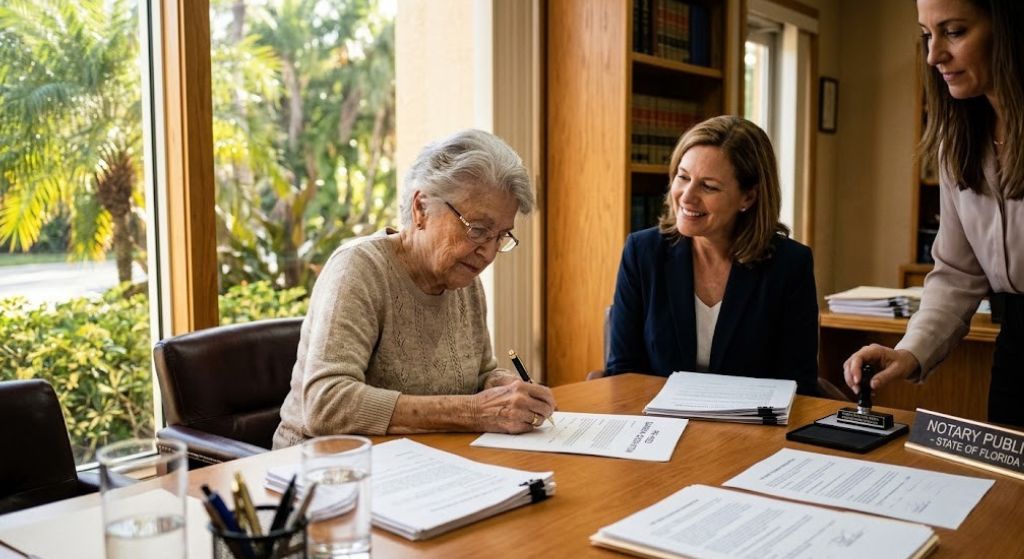
A Pre-Need Guardian Designation in Florida is a written declaration that names the person you want to serve as your guardian if a court later finds you incapacitated. It matters because guardianship is not a casual arrangement, it is a court-controlled process that can remove your rights and place key decisions in someone else’s hands.
What Is a Pre-Need Guardian Designation in Florida
A Pre-Need Guardian Designation in Florida gives you a legal way to state your personal preference before incapacity ever enters the picture. If you later lose legal capacity, that written choice tells the court who you believe should step in.
Think of it like naming the backup quarterback before the game starts. You are not forcing the coach’s hand, but you are making your choice clear while you still have full control.
How Florida Guardianship Works
Florida guardianship is governed primarily by Chapter 744, Florida Statutes. It begins only after a court process finds that a person needs protection and no less restrictive alternative works. A guardian is a court-appointed surrogate decision-maker for a minor or an adult with mental or physical disabilities.
For adults, Florida law prefers the least restrictive form of guardianship and treats guardianship as a last resort. A court can remove only specific rights and create a limited guardianship, or it can assign all delegable rights in a plenary guardianship. That is why Florida Guardianship Laws matter so much in incapacity planning.
Why Advance Naming Matters
Naming a guardian in advance protects your voice before a crisis strips it away. It also gives the court a clear starting point if family conflict, sudden illness, or a disputed diagnosis creates a guardianship case.
Without that document, a judge has to sort through testimony, family opinions, and statutory priorities. With it, the court sees your wishes in writing, which carries real weight.
Why Pre-Need Guardian Designation Matters Before Incapacity
This document belongs in a complete Florida incapacity plan because guardianship changes power. Once a person is found incapacitated, the court can remove rights that most people assume stay in their own hands.
Advance planning keeps that decision from becoming a total surprise. It also lowers the odds that a strained family dynamic turns into a legal fight over who should control money, care, or living arrangements.
Protecting Your Right to Choose
Your own selection matters because it reflects your personal preference before any incapacity finding exists. That preference deserves respect, especially when adult children, a spouse, or extended family members disagree about who should serve.
A written designation gives you the strongest possible voice at the moment when your voice may later be questioned. That is a better position than leaving the court to guess.
Reducing Court Conflict and Family Stress
A naming document gives your family a roadmap during a stressful event. Instead of arguing over who “should” serve, your loved ones can focus on care, safety, and practical decisions.
That kind of clarity saves time and money, and it often prevents a contested guardianship from escalating. When a dispute does erupt, the stakes climb quickly, which is why families sometimes need guidance through a Contested Guardianship Florida matter rather than a simple filing.
Supporting a Least-Restrictive Approach
Florida favors the least restrictive alternative, which means the court should avoid guardianship if a narrower legal tool already protects the person. A preneed designation fits that policy because it helps the court honor your wishes while still reviewing whether guardianship is actually needed.
The court still decides whether incapacity exists, but your written choice gives structure to that decision. In practical terms, it strengthens autonomy instead of surrendering it.
Who Can Create a Pre-Need Guardian Designation
A competent adult can file a written declaration naming a preneed guardian. The timing matters, because the document must be created before incapacity and while the person still understands what is being signed.
That is the whole point of the tool. It is a forward-looking decision made while you still have legal control.
Competent Adults Under Florida Law
Florida law allows a competent adult to name a preneed guardian in advance. Competence means the person understands the nature and effect of the document at the time of signing.
This is not a formality. If capacity is later challenged, the court looks at whether the designation was made when the person had the legal ability to make informed decisions.
When a Minor or Special Needs Planning Issue Is Involved
Planning for minors follows a different path because a child cannot make this kind of legal designation. Families facing disability, long-term care, or future incapacity often need a broader plan that covers guardianship, healthcare, benefits, and property management together.
That broader strategy may involve guardianship alternatives, along with trust planning and healthcare documents. The right structure depends on the legal problem you are actually trying to solve, not on a one-document shortcut.
How the Florida Court Treats a Named Pre-Need Guardian
Your named guardian does not automatically take over, but the court gives that choice a rebuttable presumption of entitlement to serve. In plain English, the judge starts by favoring your selection unless a valid reason exists to reject it.
That is a meaningful legal advantage. It turns your written preference into a factor the court must take seriously.
Rebuttable Presumption Explained
A rebuttable presumption means the court assumes your chosen person should serve, then allows evidence to challenge that assumption. It is a legal head start, not a guarantee.
If everyone agrees and the named person is qualified, the appointment usually moves more smoothly. If objections arise, the designation still shapes the hearing because your written choice remains part of the record.
When the Court Can Reject the Choice
The court keeps final authority. It can refuse to appoint the named person if that person is unfit, unavailable, disqualified, or otherwise not appropriate to serve.
That safeguard matters because guardianship is a fiduciary role, not a popularity contest. The judge has to protect the person who may lose rights, not just honor a signature.
What Rights and Decisions Guardians May Control
A guardian may control the specific rights the court removes. In a limited guardianship, the court assigns only selected powers. In a plenary guardianship, the guardian exercises all delegable legal rights and powers.
That difference is huge. It can affect finances, healthcare, where you live, and who signs legal documents on your behalf.
Limited Guardianship vs. Plenary Guardianship
Limited guardianship preserves as much independence as possible. The court removes only those rights the person cannot safely exercise.
Plenary guardianship goes much further. It places nearly all delegable authority under the guardian’s control, which is why Florida courts do not reach for it unless the facts justify that level of intervention.
Personal, Medical, and Financial Decision-Making
Guardianship can affect medical choices, routine bills, property decisions, and major life decisions depending on the court order. Once the court enters that order, the guardian acts under court supervision and must account for what is done.
That is why families often compare this issue to Guardianship vs Power of Attorney. The difference is simple and serious, a power of attorney is chosen privately, while guardianship is imposed by the court after legal findings.
Benefits of a Pre-Need Guardian Designation
The biggest benefit is control. You decide who should step forward if the court ever needs to appoint someone.
That one document can also reduce delay, lower conflict, and keep the process from turning into a family referendum.
Preserving Your Voice
Your designation gives you a legal method for expressing your wishes before any incapacity finding. That matters because once guardianship starts, your own ability to direct the outcome may already be gone.
A written choice is especially useful when you want a particular adult child, spouse, sibling, or trusted friend to serve. If your estate documents are coordinated correctly, your voice carries through the whole plan.
Avoiding Delay and Confusion
When no designation exists, families waste time arguing about who should be in charge. A preneed designation cuts through that confusion and gives everyone a clear reference point.
That clarity matters most during emergencies, when delays create stress and bad decisions. If a health crisis escalates quickly, families often end up dealing with Emergency Temporary Guardianship, which leaves even less room for uncertainty.
Reducing the Risk of Unwanted Appointment
Without advance planning, the court may appoint someone you would never have selected. That can mean a distant relative, a strained family member, or a court-guided compromise.
Naming your choice reduces that risk dramatically. It does not eliminate judicial review, but it does narrow the field around your own preference.
How to Choose the Right Pre-Need Guardian
Choose someone trustworthy, organized, and calm under pressure. Guardianship is not a symbolic honor, it is a demanding legal responsibility.
The right person can manage conflict, communicate with doctors and lawyers, and handle paperwork without creating new problems.
Family Member, Friend, or Professional Fiduciary
A family member often knows your values and can make decisions with personal context. A friend may offer neutrality when family tension runs high. A professional fiduciary brings experience and distance, which helps when the family dynamic is messy.
The best choice is the person who can actually do the job. Sentiment alone does not make a reliable guardian.
Traits That Matter Most
Reliability, financial judgment, communication skills, and availability matter most. Geographic proximity helps too, especially if decisions need fast attention.
You want someone who follows instructions, keeps records, and responds well under scrutiny. If that person cannot handle pressure, the appointment will create more problems than it solves.
Who Should Not Be Chosen
Do not choose someone with unstable habits, poor judgment, substance abuse issues, or a history of exploiting family conflict. Avoid anyone who has already shown disrespect for boundaries or money.
Guardianship requires discipline and restraint. A bad choice at this stage becomes a court problem later.
Pre-Need Guardian Designation vs. Other Florida Planning Tools
A preneed designation works best as part of a full incapacity plan. It does not replace financial, healthcare, or trust documents.
Florida families usually need more than one tool because different documents control different powers. That is where coordinated planning matters.
Durable Power of Attorney
A durable power of attorney gives someone authority to manage financial matters while you are still alive, often without court involvement. That makes it one of the strongest ways to avoid guardianship over money.
Still, it does not replace a preneed guardian designation. A power of attorney handles authority now, while the designation speaks to who should serve if guardianship later becomes necessary. For a deeper comparison, review how a durable power of attorney keeps a family out of court.
Healthcare Surrogate and Living Will
A healthcare surrogate designation names who can make medical decisions if you cannot. A living will records end-of-life wishes and helps guide treatment choices.
Together, those documents cover a major part of incapacity planning, but they do not answer the guardianship question. That is why Designation of Healthcare Surrogate and Living Wills Florida belong in the same conversation as a preneed guardian designation.
Revocable Living Trust and Supported Decision-Making
A revocable living trust helps manage assets and can keep property out of guardianship court when funded correctly. Supported decision-making, which Florida recognized more formally in 2024, gives a person assistance without stripping rights.
Those tools preserve autonomy in different ways. A Florida Revocable Living Trust handles assets, while supported decision-making and guardianship planning address personal authority and court involvement.
What Happens If You Do Not Name a Pre-Need Guardian
If you leave this decision open, the court will select based on the facts, family testimony, and statutory priorities. That means your preferences lose influence right when they matter most.
The result is usually more delay, more expense, and more tension.
Court Selection Becomes More Likely
Without a designation, the judge has to determine who should serve from scratch. That often means weighing competing family claims and deciding who is best suited for the role.
That process is slower than honoring a written preference. It also leaves more room for disagreement.
Family Disputes Become More Expensive
No designation means more hearings, more lawyer involvement, and more emotional fallout. Once relatives start fighting over who should control care or assets, costs rise fast.
Those disputes often intersect with the Florida guardianship process, where procedural deadlines and formal proofs make a simple family issue feel much larger.
Emergency Guardianship Risks
A sudden medical crisis can push a family into emergency court action. Florida allows emergency temporary guardianship for 90 days, with one possible 90-day extension if the emergency continues.
That type of proceeding is fast, limited, and stressful. It exists for true urgency, but it is a reminder that waiting until the crisis hits is the most expensive strategy of all.
Florida Guardianship Procedure in Real Life
A guardianship case usually begins with a petition and medical proof. Florida courts commonly rely on a three-member examining committee, and incapacity must be established by clear and convincing evidence.
That standard is deliberate. The court is not guessing, it is deciding whether rights should be taken away.
Incapacity Petition and Medical Proof
The incapacity process depends on formal evidence, not family frustration. Medical findings and legal filings work together to show whether the person can manage the relevant rights.
If the case is contested, the hearing becomes even more important. That is where a person’s rights and the proposed guardian’s qualifications are tested in detail.
Emergency Temporary Guardianship
Florida courts can appoint an emergency temporary guardian when immediate protection is needed. The order lasts 90 days and can be extended once for another 90 days if emergency conditions continue.
This tool is narrow by design. It handles urgent risk, not long-term planning.
Standard Timeline and Costs
Uncontested guardianship cases typically take 2 to 6 months from filing to appointment. Common costs include filing fees, medical evaluations, guardian ad litem or court-appointed attorney fees, and attorney fees.
Annual reporting can add ongoing expense too. That is exactly why advance planning often costs less than waiting for the court to impose a solution.
How to Create and Protect Your Pre-Need Guardian Designation
The document has to be drafted and signed properly if you want it to matter later. A sloppy form invites disputes, and disputes are expensive.
It should also fit cleanly with your other estate documents so nothing conflicts when the time comes.
Put the Designation in the Correct Legal Form
Use a form that clearly states your preferred guardian and reflects your current wishes. If the language is vague or outdated, the court has less reason to rely on it.
Proper execution matters because guardianship cases are technical. A clean document is easier to enforce and harder to attack.
Keep It Consistent With Your Other Documents
Your designation should match your durable power of attorney, healthcare directives, trust, and overall Florida estate documents. If one document points in a different direction, families end up arguing over which instrument controls.
Consistency is not decorative. It is what makes the plan work.
Update After Life Changes
Review the designation after marriage, divorce, relocation, death of a chosen person, or major family conflict. A document that no longer reflects your actual wishes creates the same uncertainty as no document at all.
The law respects current intent, not stale paperwork.
Frequently Asked Questions
Can you change a pre-need guardian designation later?
Yes. You can change or revoke it while you remain competent, and the updated version should reflect your current personal preference.
Does a pre-need guardian designation avoid guardianship completely?
No. It does not block a guardianship case, but it strongly influences who the court appoints if guardianship becomes necessary.
Is a lawyer required to make one in Florida?
A lawyer is not the only way to prepare the document, but legal guidance protects you from technical mistakes that weaken the designation later.
Can the court ignore your chosen guardian?
Yes, if the person is unfit, unavailable, disqualified, or otherwise not appropriate. Your choice carries weight, but the judge keeps final authority.
Is this document enough by itself?
No. It works best with a durable power of attorney, healthcare surrogate designation, living will, and trust planning where appropriate.
Who benefits most from this planning tool?
Anyone who wants to preserve autonomy, reduce family conflict, and make sure a trusted person is ready if incapacity ever arises.
A Strong Preference Deserves Strong Documentation
A Pre-Need Guardian Designation in Florida turns your personal preference into a legally meaningful instruction before incapacity takes control of the story. It does not replace the court, but it gives the court a clear reason to honor your choice and helps your family avoid confusion at the worst possible time.
For customized estate documentation that coordinates guardianship planning with your broader Florida estate documents, Klein & Fortune, P.A. provides the strategic drafting and legal precision this issue demands.