
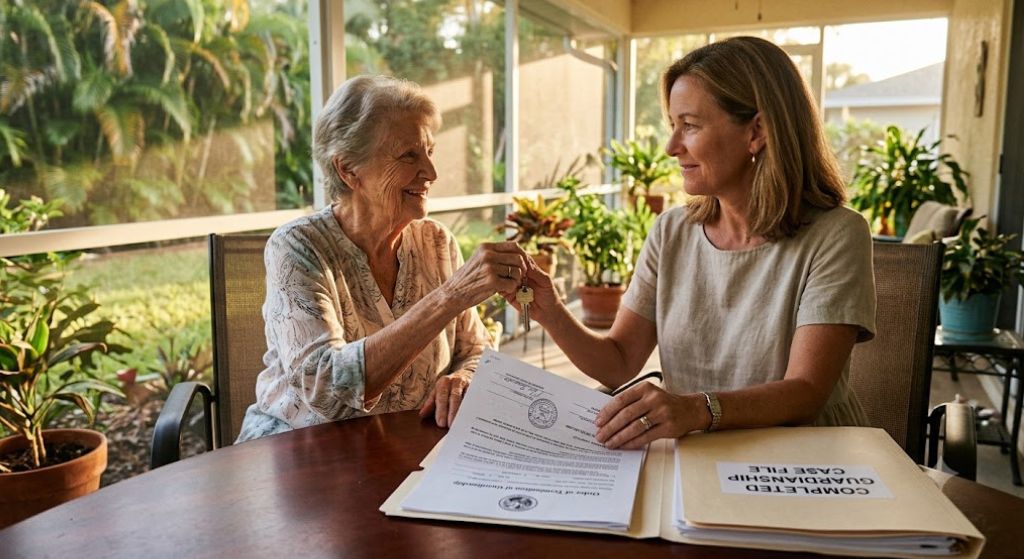
Terminating Florida guardianship means asking the court to end or narrow a guardianship because it no longer fits the ward’s actual condition. In plain English, it is the legal process for restoring rights when capacity has improved, or for stopping court oversight when the guardianship was broader than necessary. If you are protecting family autonomy, this is the point where the law shifts from control back to independence.
What Terminating Florida Guardianship Means
Terminating Florida guardianship means the court formally ends the guardianship because it is no longer needed. Restoration means rights are returned in full or in part, and that distinction matters because Florida does not treat guardianship as something that expires on its own. Under Chapter 744, the court keeps jurisdiction until it enters a formal order.
That is the practical reality families miss. A guardian does not lose authority because time has passed or because everyone agrees the ward is doing better. The court must approve the change, and the record must show why the old order no longer makes sense.
Full Termination, Partial Restoration, and Modification
Full termination ends the guardianship entirely. Partial restoration returns specific rights, such as the right to decide medical care or manage money, while leaving other restrictions in place. Modification sits between those two, because the court can narrow the guardianship before it removes it altogether.
That middle ground matters. A person does not need to prove perfect independence to regain some control. Often, a focused capacity evaluation shows that one category of rights is ready to come back while another still needs protection.
Why Florida Treats Guardianship as Temporary
Florida law treats guardianship as a last resort, not a permanent label. The whole structure rests on the least restrictive alternative standard, which means the court should use the lightest legal tool that actually protects the person. If a durable power of attorney, trust, health care surrogate, or similar planning document solves the problem, that option beats guardianship every time.
That policy shapes restoration cases too. Once the ward can safely handle decisions again, the court should stop taking those rights away. Guardianship stays in place only until the facts justify something less restrictive, which is why planning tools like a Florida Revocable Living Trust and a Durable Power of Attorney Florida matter so much before and after court involvement.
When You Can Ask to End a Florida Guardianship
Florida courts consider termination when the ward has regained capacity, when the original order was too broad, or when circumstances have changed enough that oversight no longer makes sense. The legal question is not whether life improved in a general sense. The question is whether the person can now manage the specific rights the court took away.
Restoration of Capacity
This is the most common path to termination. If the ward can understand decisions, weigh consequences, and communicate a choice with enough consistency to handle personal, medical, or financial affairs, the court has a basis to restore rights. The focus is specific, not vague, because a person may recover enough ability for some decisions while still needing help with others.
Florida’s annual guardianship plan even forces that issue into the open. It asks whether the ward can now consent to treatment, contract, choose a residence, obtain a driver’s license, manage property, make gifts, marry, or apply for benefits. That is not paperwork for the sake of paperwork. It is a built-in reminder that restoration should always stay on the table.
Improper or Overbroad Guardianship
Sometimes the original guardianship was broader than the facts supported. A limited guardianship may have become a plenary one without enough justification, or the court may have relied on old information that no longer describes the ward’s condition. In those situations, modification or termination becomes the right remedy.
Here is where Florida Guardianship Laws interact with real-world strategy. If the court never needed to strip every delegable right, the law does not require you to keep living under that mistake. A focused challenge can trim the order instead of fighting an all-or-nothing battle through a contested guardianship Florida case.
Death of the Ward
The guardianship ends when the ward dies, but the legal work does not stop there. The guardian still must complete a final accounting, transfer property, and close the case correctly. Courts care about clean administration because the ward’s death changes the goal from protection to settlement and transfer.
A Minor Reaching Adulthood
Guardianships for minors end when the child becomes an adult. That does not necessarily end every legal issue tied to the child’s property, however, especially if assets, settlements, or special needs planning remain in place. At that point, the focus shifts from guardianship to whatever estate or trust structure protects the young adult’s interests.
Guardian Resignation, Removal, or No Longer Needed Oversight
A guardian can resign, be removed for misconduct, or become unnecessary because the ward’s condition has improved. None of those events automatically restores rights, but they often trigger the court’s review. If the current structure no longer serves a protective purpose, the court should reduce or end it.
Who Can File to Terminate the Guardianship
Florida gives broad standing to ask for restoration or termination. Under Fla. Stat. § 744.464, any interested person, including the ward, can petition the court. That matters because a ward does not have to wait for a guardian to volunteer or for family members to agree on the next move.
The Ward
The ward has the right to ask the court for restoration. That right is direct and personal, and it does not depend on anyone else’s permission. If you are the ward, your own petition can start the process and force the court to look at the present facts rather than old assumptions.
Interested Persons
Interested persons include family members, caregivers, and others with a real stake in the ward’s rights, care, or property. Florida uses a practical definition here, not a narrow one. If you have a direct legal or financial connection to the guardianship, the court can hear from you.
Guardian and Other Parties
A guardian, attorney, or other party can raise the issue when the evidence shows the guardianship should end or be reduced. Sometimes the guardian’s own reports support restoration, which is exactly why careful annual review matters. A good record can make the case for narrowing the order before conflict hardens.
How the Florida Termination Process Works
The process starts with a filing that asks for the exact relief you want. That may be full discharge, partial restoration, or a narrower modification. Precision matters, because vague requests waste time and invite delay.
Filing the Petition or Motion
The petition should state why the guardianship no longer fits the ward’s condition and identify which rights should be restored. If the goal is full termination, the pleading should say so clearly. If the facts support only partial restoration, that is usually the smarter request.
Court Review and Notice
The court reviews the filing and requires notice to the people entitled to receive it. That means no shortcut and no informal agreement can substitute for judicial process. If someone objects, the judge hears it before entering an order.
Examining Committee, Evaluation, or Monitor
The court often uses an examining committee, medical evaluation, or monitor to assess current capacity. That evidence matters because restoration is not a popularity contest. The court wants current, specific proof about cognition, judgment, and daily function.
Hearing and Judicial Decision
At the hearing, the judge considers testimony, reports, and argument about the ward’s current abilities. In Florida, restoration proceedings often turn on the quality of the proof, and practice can vary on the exact burden applied. The safe assumption is simple: strong, current evidence wins, weak or outdated evidence loses.
Final Order and Case Closure
If the court grants termination, the guardian’s authority ends as of the order. The matter closes only after the final reports, transfers, and filings are done. Until then, the court still expects clean administration of the guardianship estate.
What Evidence Supports Restoration of Rights
Florida courts do not restore rights because someone looks better in a family photo. They restore rights because the evidence shows the person can now manage the relevant decisions with enough consistency and safety. That is the threshold.
Medical and Psychological Evaluations
The most persuasive evidence usually comes from recent evaluations that address memory, judgment, understanding, reasoning, and the ability to function independently. A diagnosis by itself does not decide the case. The court cares about what the diagnosis means for actual decision-making today.
Functional Evidence of Independence
Can the person pay bills, arrange housing, choose treatment, manage transportation, and handle day-to-day decisions without constant intervention? That is the real question. Functional independence matters because capacity is about doing, not just about talking.
Financial Records and Property Management Proof
If the guardianship covers property, financial evidence matters. Bank records, payment history, income documentation, and budgeting records can show whether the ward can safely handle assets again. For property owners in Broward and Miami-Dade County, that evidence often decides whether control returns or remains supervised.
Testimony from Family, Caregivers, and Professionals
People who see the ward regularly can provide useful testimony about stability, judgment, and consistency. The best testimony is specific. It describes recent decisions, not general praise.
Guardian Reports and Annual Plan Records
Annual reports and planning forms can be powerful because they track actual performance over time. If the guardian’s own filings show improvement, less supervision, or unexplained restrictions, that record supports restoration. Courts pay attention when the paperwork tells a different story than the old order.
What Rights Florida Courts May Restore
Restoration does not have to happen all at once. Florida courts can return some rights while leaving others in place, which is often the most sensible outcome when capacity is uneven.
Medical and Personal Decision-Making
A court can restore the right to consent to treatment, choose providers, and make personal care decisions. That kind of restoration usually depends on the ward’s ability to understand risks and communicate informed choices.
Residence and Social Choices
The court can also restore the right to decide where to live, who to associate with, and how to structure personal relationships. These rights matter because autonomy is not just financial, it is deeply personal.
Property and Financial Rights
Property rights include managing money, signing contracts, making gifts, and controlling assets. If you are dealing with family property or business interests, this part of the case has direct consequences for bank accounts, deeds, and ongoing transactions. Planning tools like guardianship alternatives often show the court that less restrictive control already exists.
Marriage, Voting, Driver’s License, and Other Civil Rights
A restoration petition can seek the return of civil rights such as the right to marry or vote, along with the right to obtain a driver’s license where applicable. Each right deserves separate attention. The court should not leave a person under broader restrictions than the evidence supports.
Common Obstacles and Oppositions
Restoration cases often become contested because another party fears loss of control or worries about safety. That concern is real, but it does not defeat a valid petition. The court still has to decide whether the guardianship remains necessary.
Disputes About Capacity
Family members and professionals often disagree about whether capacity has actually returned. One person sees independence, another sees risk. The court resolves that gap through evidence, not family politics.
Safety and Exploitation Concerns
Courts focus hard on exploitation, coercion, fraud, and financial abuse. If those risks remain high, the judge will hesitate to restore broad authority. That is why independence planning must always include safeguards, not just optimism.
Guardian Misconduct, Mismanagement, or Surcharge Issues
If the guardian mishandled funds or ignored duties, the court may remove the guardian and scrutinize the administration. That does not automatically restore rights, but it can support termination or modification. It also creates separate accounting and surcharge issues that need clean resolution.
Missing Records or Incomplete Accounting
Missing records delay discharge. Even when everyone agrees the guardianship should end, the court still wants the financial trail closed. No final order should leave unanswered questions about property, expenses, or transfers.
What Happens After the Guardianship Ends
Ending the guardianship starts a transition, not a free-for-all. Property, records, and legal authority have to move back to the ward or to the estate in a structured way.
Final Accounting and Transfer of Assets
The guardian must file the final report and transfer property and records where the court directs. That includes documents, account histories, and any assets still under control. A clean handoff protects everyone from later disputes.
Returning Control of Banking, Real Estate, and Benefits
Once rights are restored, banks, title companies, benefit administrators, and other institutions need updated orders. Real estate titles and account authority often need immediate cleanup. If those assets sit in Broward or Miami-Dade, local administration matters just as much as the court order itself.
Updating Estate Planning and Legal Documents
After restoration, your documents need to match your restored rights. Powers of attorney, health care directives, trusts, beneficiary designations, and title documents should all reflect the new legal reality. That is where proactive estate planning keeps you from landing back in court.
How to Avoid Future Guardianship Problems
The best guardianship case is the one you never need. Florida’s least restrictive alternative rule favors planning that preserves autonomy before a crisis forces judicial control.
Powers of Attorney and Health Care Directives
Durable powers of attorney, health care surrogates, and living wills give you tools to manage incapacity without turning every decision into litigation. They work because they keep authority inside your own plan instead of handing it to a judge. If you want to understand how that differs from court control, compare it with the role of a court-appointed guardian.
Revocable Trusts and Asset Titling
A properly funded trust helps you preserve control while preparing for incapacity. It also keeps asset management from stalling if a guardian ever becomes unnecessary later. For owners with real estate, business interests, or multiple accounts, trust funding is where protection becomes practical.
Supported Decision-Making and Other Least Restrictive Alternatives
Supported decision-making, family assistance, and targeted delegation preserve independence better than blanket control. Florida courts recognize that a person should keep rights whenever safe and legally possible. That principle is the backbone of every serious Florida Guardianship Process strategy.
Frequently Asked Questions About Terminating Florida Guardianship
How long does termination take?
The timeline depends on the court’s schedule, the strength of the evidence, and whether expert evaluations or objections are involved. A clean case moves faster. A disputed case takes longer because the judge needs a full record.
What standard of proof applies?
Florida restoration cases are evidence-driven, and courts focus on whether the proof supports returning rights in the specific case. Standards can be discussed differently across cases and filings, which is why legal guidance matters. The practical goal is simple, present strong proof of current capacity.
Can you restore only some rights?
Yes. Partial restoration is common and often smart when the ward can handle some decisions but not others. The court can return personal or medical rights while keeping financial oversight in place.
Do you need a lawyer to terminate guardianship?
You need legal help when rights, property, and medical decisions are on the line. The petition, evidence, notice, and hearing all have to line up correctly. A misstep can delay restoration or leave a weak order in place.
What if the court denies restoration?
A denial does not end the story. You can usually gather better evidence, seek modification, or renew the request when the facts change. The key is to keep building a record that matches the ward’s current condition.
Does the guardian’s annual report matter?
Yes, and often more than families expect. The annual report can show improvement, identify unused restrictions, and document whether certain rights should now be restored. It is one of the strongest tools for spotting when the guardianship has outlived its purpose.
When You Should Act Now
If capacity has improved, waiting helps no one. The longer an outdated guardianship stays in place, the longer your rights, assets, and decisions remain under unnecessary court control. The right move is to act on current evidence, not old assumptions, and to push for restoration of rights before the case hardens into a permanent restriction.
References
- americanbar.org
- flcourts.gov
- flcourts.gov
- jud11.flcourts.org
- thompsonmcclarydefensefirm.com