
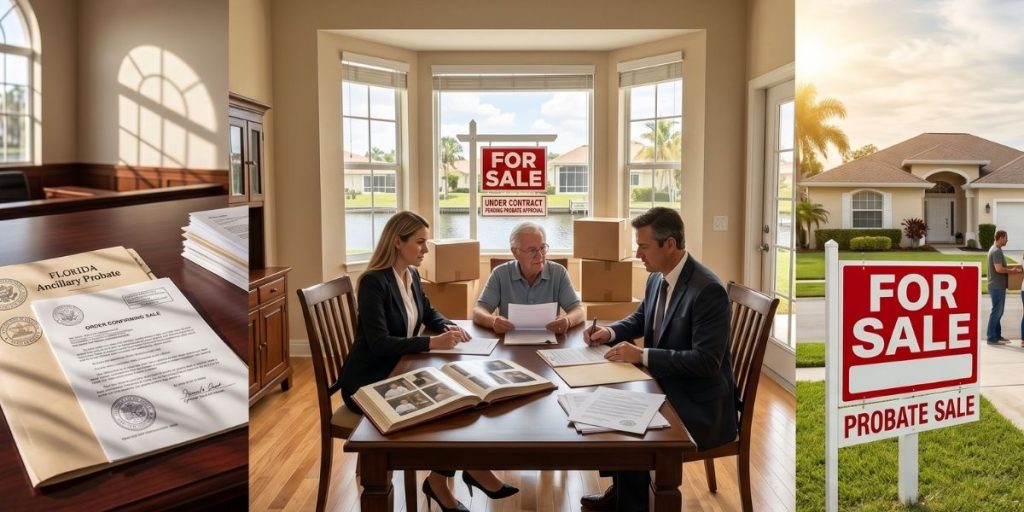
Selling Property in Probate in Florida tends to feel like a real estate transaction until the first title objection or court requirement hits. Probate is a legal transfer process, and the sale only moves quickly when the right person has written authority, the title is made marketable, and court approvals (including an Order Authorizing Sale when required) are handled on the court’s timeline, not the closing timeline.
To keep expectations realistic: probate can wrap in months when the estate is organized, but it can also stretch much longer when authority documents, creditor issues, or family conflict are ignored early. One practical guide notes probate can take months to years when complications arise.
What this guide covers:
- Who can sign and when
- The authority documents buyers and title companies demand
- A pre-list checklist that prevents bottlenecks
- The sale workflow from valuation to closing
- The delay triggers that cause contract rewrites and continuances
- The team and process that keeps remote, multi-heir sales moving
Selling Property in Probate in Florida: What “Probate” Means for Title and Timing
Probate is the court-supervised process that transfers a deceased owner’s assets, including real estate, to the proper parties and clears the legal pathway to sell. In plain terms, it turns a property that is “stuck in a deceased person’s name” into a property that can be conveyed with insurable, marketable title.
That is why estate real estate cannot be sold “like normal” right after death. Until the court appoints a personal representative and the title issues are resolved, there is often no legally recognized signer, no clear chain of title for a buyer, and no clean way for a title insurer to take on the risk. Delays typically come from three places: missing authority, creditor claim periods and payoffs, and defects that keep title from being insurable.
Residential and commercial properties share the same authority and title requirements, but commercial deals add friction. Leases, rent rolls, CAM reconciliations, estoppels, and vendor contracts can create third-party rights that must be reviewed before marketing. Florida estates with complicated income property often benefit from the specialized workflow described in commercial probate administration.
Who Can Legally Sell: Personal Representative vs. Heirs vs. Trustees
Florida uses the term “personal representative” for the person the court appoints to act on behalf of the estate. Heirs and beneficiaries may ultimately receive the property or the sale proceeds, but they generally cannot sign a binding listing agreement, purchase contract, or deed simply because they are related to the decedent.
A trustee is different. If the property is titled in the name of a trust, the trustee may have immediate authority to sell under the trust instrument, outside probate. The key is always title: if the deed shows a trust (or survivorship ownership), the sale path can be very different than if the deed shows the decedent individually.
Out-of-state heirs regularly assume the next step is calling a Realtor and listing. In Florida probate, that assumption often causes rework: the “seller” on the contract is wrong, signatures are invalid, and the title company rejects the file. For families juggling logistics across states, it helps to understand the operating constraints described in out-of-state executor responsibilities.
The #1 Rule to Avoid Delays: No Contract/Closing Without Authority Documents
No sale should be treated as real until the personal representative has court-issued authority documents, usually Letters of Administration or Letters Testamentary (also called Letters). Multiple probate resources emphasize that a probate sale typically cannot proceed until the court appoints the representative and issues the Letters that authorize the sale and deed signing, similar to how other states require “letters” before a valid conveyance can occur (letters of administration).
Before appointment, productive work still exists, and it prevents weeks of delay later. The estate can preserve the property, secure valuables, gather the deed and mortgage statements, collect HOA information, request code enforcement records, and order preliminary title work. What should wait are actions that imply authority: signing contracts, accepting offers, or representing that the estate can convey clear title by a date that is not yet grounded in court authority.
Pre-Sale Legal Readiness Checklist (Do This Before You List)
Probate sales close on preparation, not optimism. A practical sequence reduces the most common Florida bottlenecks: missing heirs, incomplete notices, title defects, and last-minute creditor surprises. The theme is simple: confirm who can act, confirm what must be approved, and confirm what must be paid off or cured before a buyer’s title policy can issue.
Step 1: Open the Estate and Get the Court Appointment Fast
Probate is typically required when the property is titled solely in the decedent’s name (no survivorship owner) and there is no trust holding title. The court appointment slows down when the basics are missing: an original will, a certified death certificate, a clear list of heirs and addresses, and information about the asset. The fastest filings are the ones that do not require the attorney to chase family facts across multiple states and multiple versions of the story.
If the decedent died without a will, Florida’s intestate rules determine who inherits, and that can affect both who must be notified and who must consent to a sale. Estates that discover a surprise heir late often lose months. For a deeper look at how that happens at the title level, see the guide on how intestate rules change ownership.
Step 2: Read the Will/Plan for Sale Authority and Restrictions
A will can expand or limit the personal representative’s authority. Some wills grant broad power to sell, while others require beneficiary consent, special notice, or impose restrictions that effectively force a court petition even when the family wants speed.
One recurring problem is a “specific devise,” where the will gifts the property to a named beneficiary rather than blending it into the residue. If that beneficiary wants to keep the home but other heirs need cash, the conflict is structural. Those cases either require careful negotiated resolution or, if negotiations fail, the dispute can escalate into litigation.
Step 3: Identify the Probate “Administration Type” and Whether Court Approval Is Required
Florida probate is not one speed. The administration type determines how many court touchpoints exist before a sale can close. Some estates can sell with fewer approvals once the personal representative is appointed. Others require a petition and an Order Authorizing Sale, and the timing is dictated by filing deadlines, notice requirements, and available hearing slots.
As a practical lens: if a court order will be required, the listing timeline should be built backward from the expected hearing date, not forward from the day the property is cleaned out. Estates that skip this step often accept offers they cannot legally close on time, then renegotiate extensions under pressure. For high-value properties that push estates into formal processes, the overview on when formal administration applies provides helpful context.
Step 4: Run a Probate-Specific Title & Lien Audit (Before Marketing)
Probate buyers and title insurers care about one thing more than staging: whether the estate can deliver insurable title. A probate-specific title audit reviews the deed chain, open mortgages, satisfactions that were never recorded, property taxes, HOA or condo association balances, code enforcement liens, judgments, state and federal tax liens, and any recorded agreements affecting use.
Commercial properties add lease rights and tenant claims, while residential properties often carry HOA estoppel and permit issues that can derail closings. The estates that win on speed order title work early, then build a cure plan. When defects show up, the fastest path is targeted, document-driven correction, as outlined in clearing inherited title problems.
Step 5: Stabilize the Property and Stop the “Carrying Cost” Bleed
After death, insurance and occupancy status can change overnight. Vacancy increases risk, and some carriers restrict coverage if a home is unoccupied or poorly maintained. Utilities, lawn care, pool service, and basic repairs keep the asset from deteriorating while probate moves forward.
Who pays is a legal and practical question. Often the estate pays from an estate account once established, but beneficiaries sometimes advance funds to prevent damage or code violations. Those advances should be tracked with receipts and documented clearly so reimbursements do not turn into the next family dispute.
The Legal Steps to Sell During Probate (From Pricing to Closing Without Bottlenecks)
Once authority and title preparation are underway, the sale becomes a coordinated legal workflow. The personal representative acts as a fiduciary, meaning decisions must be defensible: fair value, proper disclosure, correct notice, and compliance with any required court approvals. The surest protection against missteps is a probate team that has handled the pattern many times. A firm with 100+ years of combined experience often functions as a shield here, catching small errors (wrong vesting, wrong signer, missing consents, mis-calendared notices) before they become months of delay.
Step 6: Establish Value Early (Appraisal vs. Market Analysis) to Reduce Challenges
Independent valuation is not just about pricing, it is about preventing objections. Appraisals help when there are multiple beneficiaries, contested dynamics, commercial income considerations, or a fast investor sale that could later be attacked as “too cheap.” A clean valuation file also supports a petition for Order Authorizing Sale when a judge wants to see that the deal is in the estate’s best interest.
Step 7: List and Disclose Correctly as an Estate Sale
Estate listings should reflect the correct seller: the estate, acting through the personal representative, not individual heirs. Buyers routinely ask for the Letters, a copy of the will (or relevant excerpts), and confirmation of whether court approval is required. Disclosures should be handled carefully, particularly when the representative never lived in the property and cannot truthfully make detailed condition representations.
Marketing timelines should match probate milestones. If creditor periods, title cures, or a court order are pending, the listing can still happen, but the contract dates must be realistic and drafted to avoid false urgency that later triggers extensions.
Step 8: Accepting Offers Without Creating Legal Rework
Probate contracts fall apart for avoidable reasons: the wrong party signs, the contract misstates vesting, the addenda ignore the need for an Order Authorizing Sale, or the closing date is set before the estate can legally convey.
A clean offer acceptance package typically includes proof of authority, clear identification of the personal representative’s capacity, and contract language that accounts for probate timing. Earnest money handling also needs to be clear, especially when court approval is pending and timelines may extend.
Step 9: Handling Required Notices, Creditor Claims, and Payoffs So Closing Doesn’t Stall
Even when a buyer is ready, estates still have to clear debts and liens that attach to title. Creditor claims can affect net proceeds and, in some estates, can delay distributions until the representative is confident the estate can pay what it owes. Mortgage payoffs, HOA estoppels, tax balances, and code enforcement fines should be requested early because payoff departments and municipalities move on their own timelines.
Title and closing agents often need estate documentation well before closing: Letters, an EIN and estate account information, and any court orders authorizing the transaction. When those items arrive late, “ready to close” becomes “ready to reschedule.”
Step 10: Court Approval (If Required): Petitions, Hearings, and How to Calendar for Speed
When Florida probate requires an Order Authorizing Sale, the process must be treated like its own project. The typical path involves preparing a petition that explains the sale terms and why the transaction benefits the estate, providing required notices to interested parties, and obtaining a hearing date if the court schedules one.
Continuances happen for boring reasons: incomplete filings, missing exhibits, inadequate notice, unclear pricing support, or last-minute objections from beneficiaries. Speed comes from filing a complete petition, attaching the right backup (contract, appraisal or market support, payoff snapshots), and running notice like a checklist, not a hope. The fiduciary duty angle matters here: the representative is not just trying to sell, the representative is creating a record showing prudent decision-making under court supervision.
Step 11: Closing the Sale and Distributing Proceeds Properly
At closing, the deed is executed by the personal representative in that capacity, and sale proceeds typically go into the estate account, not directly to beneficiaries. Reserves may be held for taxes, creditor claims, and administrative expenses. Distributing too early can create personal liability for the representative if later claims surface that the estate cannot pay.
For a detailed walkthrough of documents, funding, and common last-minute issues, the explainer on what happens at a probate closing helps set expectations.
The Biggest Delay Triggers (and How to Prevent Them)
Probate delays are rarely about the market. They are about authority, conflict, and title. The estates that avoid delays treat probate like a legal operation with a timeline, stakeholders, and risk controls.
Authority & Family Conflict: The Fastest Way to Lose Months
Disputes over who should serve as personal representative, whether the property should be sold, or what price is acceptable are the quickest way to freeze progress. Prevention looks unglamorous: early identification of all interested parties, consistent written updates, a documented valuation approach, and attorney-guided decision points.
When co-heirs cannot agree and one party wants to force a sale, litigation may be the only mechanism left. The process and trade-offs are covered in the discussion of partition as a remedy.
Title Defects and “Hidden” Liens That Surface at the Worst Time
Old mortgages that were paid but never released, code enforcement liens, HOA superliens, boundary problems, and deed errors tend to surface at the worst possible time, after the buyer’s title search and days before closing. Early title commitment and proactive curing turn “surprises” into scheduled tasks, which is the whole game in probate sales.
Waiting Too Long to Start Probate (and the Compounding Costs)
Delay compounds carrying costs and risk: insurance complications, vandalism, deferred maintenance, tenant issues, and rising skepticism from buyers and investors who sense disorganization. The first 30 days after death often determines whether the sale is a smooth transfer or a long salvage operation, even if the actual listing happens later. When foreclosure pressure exists, early intervention matters, and the resource on preventing foreclosure during probate is often relevant sooner than families expect.
A No-Delay Team and Workflow for Florida Probate Sales (Out-of-State Friendly)
The fastest probate sales are rarely solo efforts. They are coordinated between probate counsel, title, real estate professionals, and the decision-makers who actually have standing in the estate. A seasoned probate team with 100+ years of combined experience typically reduces delays by preventing avoidable errors, creating court-ready files for an Order Authorizing Sale, and keeping fiduciary duty documentation tight.
When You Need a Florida Probate Attorney (and What to Ask in the First Call)
Counsel becomes especially valuable when authority is unclear, family dynamics are strained, creditor issues are significant, commercial property is involved, or another state’s property triggers ancillary proceedings. The most productive early conversations focus on: who has authority today, whether court approval and an Order Authorizing Sale will be required, what the timeline looks like in that division, how notices will be handled, and what the title clearing plan is.
Choosing a Probate-Experienced Realtor/Investor Approach (Retail vs. As-Is)
Retail listings can produce higher sale prices when the property is market-ready, but they require clean disclosures, inspection responsiveness, and tighter scheduling coordination with probate milestones. Investor and as-is sales can be faster and may reduce repair and showing burdens, but they require even stronger valuation support to protect the representative’s fiduciary position, especially when beneficiaries question price.
Strategy should match the estate’s reality: debt load, condition, carrying costs, and family consensus. The wrong strategy creates delay because it triggers objections, renegotiations, or court scrutiny.
Probate-Specific Organization to Keep Momentum (Remote Signings, Deadlines, Documentation)
Probate organization is mostly document control and calendar control. A shared document vault for the will, Letters, death certificate, deed, payoff statements, HOA contact info, and title commitments prevents repeated scramble. A single calendar that tracks creditor periods, court dates, filing deadlines, and closing milestones prevents “impossible” contract dates.
Remote execution also needs planning. Notarization requirements, courier timelines, and signature authority should be solved early so the closing does not become a logistics problem at the finish line.
Frequently Asked Questions
How long does selling property in probate take in Florida?
Timing depends on the administration type, creditor issues, and whether court approval and an Order Authorizing Sale are required. Simple estates can move in months once a personal representative is appointed, while estates with disputes, title defects, or creditor complications can take far longer.
Can heirs sign a listing agreement or contract before a personal representative is appointed?
Generally, no. Heirs and beneficiaries typically do not have authority to bind the estate, and title companies and buyers will require court-issued Letters showing who can sign on behalf of the estate.
When does a Florida court require an Order Authorizing Sale?
Court approval is more likely when the administration is supervised, the will restricts authority, there are disputes, or the court requires a formal record that the sale is in the estate’s best interest. The safest approach is to assume a court order may be needed until counsel confirms otherwise.
What happens to the sale proceeds at closing?
Proceeds typically go into an estate bank account, not directly to beneficiaries. The personal representative may hold reserves for creditor claims, taxes, and administration expenses before making distributions according to the will or Florida law.
What causes probate real estate closings to get delayed at the last minute?
The most common causes are missing authority documents, unresolved liens, payoff delays, incorrect contract parties, and family objections that trigger court involvement. Early title work and a court-aware calendar prevent most of these surprises.
This article is for informational purposes only and does not constitute legal advice. Accreditation requirements vary by state and payor contract. Consult with a qualified attorney regarding your specific compliance obligations.