
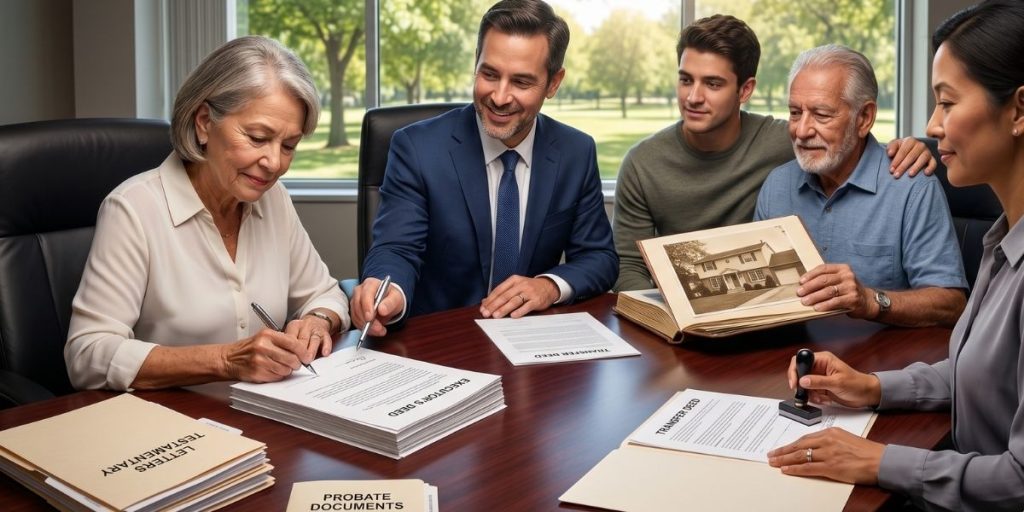
A Probate Real Estate Closing is the final signing and funding event that transfers real property from a deceased owner’s estate to a buyer, and it rarely behaves like a normal Florida closing. The paperwork may look familiar, but the timeline is driven by probate authority, title underwriting, creditor issues, and court rules that can move faster or slower than the market.
What a Probate Real Estate Closing Is (and Why It’s Different From a Typical Closing)
A probate real estate closing is the sale or transfer of a deceased person’s home, condo, rental, or commercial building through an open estate, with the personal representative (executor) acting under authority granted by the probate court. In a standard closing, “seller readiness” often means the seller can sign, provide title, and deliver possession. In probate, the estate may be emotionally and operationally ready while the law is not.
That difference shows up in the order of operations. The transaction becomes milestone-based: appointment of a personal representative, issuance of Letters of Administration, confirmation of authority to sell, clearance of probate-related title requirements, and sometimes additional court permission. Florida-specific probate rules matter because they shape who can sign, what must be proven about homestead status, and what a title company will insure without exception.
Many estates include real property, which means this scenario is common, not exotic. Industry research often cites that 80% contain real estate, so the market has developed a full ecosystem around getting these closings done safely, especially when heirs live out of state, when there are multiple beneficiaries, or when the property has been neglected for years.
Probate closing vs. standard closing: the key differences
The “extra layers” in probate revolve around authority and insurability. The personal representative must be appointed before the estate can reliably sign a contract and deed, and the Letters of Administration become the practical ID card that buyers, lenders, and title underwriters rely on. Depending on how the estate is administered, the probate court may need to approve the sale terms, approve the personal representative’s authority to sell, or sign off on specific conveyance language.
Probate also adds timing pressures that have nothing to do with buyer financing. Creditor claim periods, estate debts, and tax administration can influence whether proceeds must be held in escrow or whether certain payoffs must be documented in a particular way before funds move. Florida homestead questions can reshape who ultimately has rights in the property, even when a will exists, and those questions can require court determinations before a deed can pass “clean.”
That said, probate closings are not automatically slow. Once authority is in place and title is clear, closings can move on a normal schedule, and cash-heavy deals sometimes close in as little as 14 to 21 days. The delays tend to come earlier, when probate milestones are incomplete or when title underwriters need corrective documents to insure the chain of title.
Who’s Involved and What Each Party Does
Probate real estate is a team sport. The roles overlap, but responsibilities are not interchangeable, and deals stall when someone assumes another party is handling a document, a payoff, or a court filing. The core participants typically include the personal representative, the probate attorney, the title company or closing agent, a Realtor or investor, and the probate court itself.
In Florida, the closing agent and title underwriter often become the “traffic controller” for deadlines and document sufficiency. When escrow and title are coordinated together, there is less chance that funds are ready while title is still pending, or that title is clear while payoff figures expire.
Personal Representative (Executor) vs. heirs/beneficiaries: who has authority to sell?
The personal representative is the legal operator of the estate. Once appointed, that person generally signs the listing agreement (if any), the purchase contract, and the deed conveying title to the buyer. Beneficiaries may be consulted, may have expectations, and in some situations may need to consent, but “being an heir” does not automatically confer the power to sign a deed.
This distinction matters most when multiple siblings or extended family members assume that majority agreement equals authority. It does not. The authority flows from the probate court’s appointment and the scope of administration, not from family consensus. When consensus breaks down, the dispute can turn into litigation, and at that point it becomes less about closing logistics and more about resolving rights, sometimes through probate-related real estate litigation or other court actions.
Probate attorney, title company/closing agent, Realtor/investor, and the court
The probate attorney shepherds the court process: filing the petition, obtaining the order appointing the personal representative, securing Letters of Administration, and requesting any additional authority needed to sell. The attorney also helps the personal representative meet statutory duties, including notice requirements and creditor administration.
The title company (and its underwriter) is focused on insurable title. That includes reviewing the chain of title, evaluating probate orders, requiring affidavits, confirming payoff and lien releases, and preparing the settlement statement. A Realtor or investor coordinates transaction logistics, access, inspections, repair negotiations, and buyer-side deadlines. The probate court is not present at the closing table, but it may effectively dictate when closing can occur through hearing dates, required orders, or procedural timing.
Klein and Fortune reduces friction by handling escrow and title under one roof, so the same team that clears probate-related title issues also controls the earnest money deposit, payoff timing, and funding choreography. That structure helps prevent a common probate problem: parties discovering at the end that the deed is ready, but the underwriter still needs a court-certified document, an updated Letters of Administration, or a homestead-related order before insuring.
Out-of-state heirs and ancillary administration in Florida (when it comes up)
Ancillary administration comes up when the decedent lived outside Florida but owned Florida real estate. Florida often requires a Florida probate proceeding to transfer Florida land, even if a primary probate case is active elsewhere. That additional proceeding can change the timeline because Florida courts still need to appoint a Florida personal representative or recognize authority in a Florida-specific way before a deed can be recorded.
Out-of-state parties should expect more logistical steps even when everything is friendly. Remote signing, identity verification, notary compliance, and the shipping of original documents can introduce avoidable delays if started late. A dedicated guide to how ancillary probate works for non-Florida families is often the fastest way to understand why “the estate already has a case” may still not be enough to close in Florida.
The Pre-Closing Timeline: What Has to Happen Before You Can “Schedule Closing”
Most probate closings are delayed for one simple reason: the transaction is treated like a normal sale until the final week, when someone realizes the estate cannot yet convey insurable title. The practical way to avoid that outcome is to treat pre-closing as its own project with a sequence and dependencies.
Step 1: Open the estate and get authority (Letters of Administration)
The estate is opened by filing a probate petition and related documents with the court. The court then appoints a personal representative and issues Letters of Administration (or Letters Testamentary in some contexts), which confirm authority to act for the estate. Title underwriters and buyers routinely require these letters before accepting a deed signed by the personal representative, because that document answers the foundational question: who is legally allowed to sell?
Without letters, the deal may still be marketed and negotiated, but closing is not realistically “schedulable.” Even when a contract is signed early, the title company will typically condition closing on proof of authority, and lenders may refuse to proceed until authority is verified.
Step 2: Confirm the estate’s power to sell (full authority vs. limited authority)
Florida probate administration can grant broader or narrower powers. Some personal representatives have authority to sell without additional court orders. Others must obtain court approval for the sale, or at least for certain terms, depending on the will, the probate pleadings, and the type of administration.
The practical impact is straightforward. Full authority behaves more like a standard transaction once title is clear. Limited authority behaves more like a court-calendar transaction, where “ready to close” can still mean waiting for a hearing date or a signed order. When contracts are drafted without acknowledging that difference, buyers may assume the estate is delaying, when in fact the estate is legally waiting.
Step 3: Order title work early: chain of title, probate-related “title traps,” and required corrective documents
Title work is not just a checkbox in probate. It is the mechanism that turns a family story into a recordable, insurable chain of ownership. Florida probate properties regularly surface “title traps”: a deed that was never recorded, a prior owner’s probate that was skipped informally, an unreleased mortgage, or a break in the chain caused by a transfer to a trust or entity that was not properly documented.
Title issues are not rare in the general market, and one industry summary points to 11% delayed because of title problems. In probate, the risk is amplified because the seller is not an individual who can simply sign a corrective deed whenever asked. The seller is an estate acting through court-granted authority, and corrective instruments may require additional probate documents, affidavits, or court orders.
This is also where specialized probate title handling matters. Clearing probate-related title defects can involve deeds of distribution, affidavits of heirship, certified copies of probate orders, and carefully drafted personal representative deeds that match the underwriter’s requirements. When the issues are more complex, a deeper look at clearing inherited title defects helps explain why early title review can save weeks.
Step 4: Address liens, mortgages, judgments, and open permits before closing
Even when the owner has died, the property can still be encumbered. Mortgages need payoff statements. Judgments may require satisfaction or negotiation. HOA and condo associations require estoppel letters. Municipal code enforcement liens can be surprisingly large, especially for overgrown lots, unpermitted work, or long-running violations.
Open permits are a frequent probate surprise because heirs may not know that work was done years ago and never finalized. One South Florida practitioner notes that open permits can complicate inherited home sales, which tracks what title companies see across Florida: the permitting history must be checked early, not after closing is scheduled. The same is true for utility balances, demolition liens, and special assessments.
Clearing title in practice means lining up documents that satisfy underwriting. Payoff letters must be current. Releases must be recordable. If a lien cannot be released before closing, the parties may negotiate an escrow holdback with clear instructions, but that requires coordination among the probate attorney, title agent, and underwriter.
Step 5: Creditor claims, estate debts, and taxes that may delay the sale proceeds distribution
Selling the property is one milestone. Distributing proceeds to heirs is another. Probate administration has duties: handling creditor claims, paying valid debts, and dealing with tax obligations where applicable. Even when a sale closes quickly, proceeds may remain in the estate account until the attorney is satisfied that required notices were handled and that reserves are appropriate.
This is often where expectations get crossed. Beneficiaries may assume that a completed closing equals an immediate check. In reality, the closing often funds the estate first, and distributions follow after the estate’s obligations are addressed. Title companies may also require certain debts to be paid at closing or may insist on escrow holds when a potential claim is known but not yet resolved.
What Happens During the Probate Real Estate Closing (Day-of Walkthrough)
The closing itself can feel anticlimactic after months of probate administration. Most of the real work is in authority and title clearance. On closing day, the transaction becomes a controlled exchange: documents are signed, funds are collected and disbursed, the deed records, and title insurance issues.
In probate, the day-of differences usually involve who is signing and what must be proven in writing to satisfy the underwriter.
The closing documents you’ll likely see (and who signs them)
Most probate closings include a deed executed by the personal representative (often a personal representative’s deed), a settlement statement, and title affidavits. The personal representative signs as a fiduciary, not as an individual owner. Buyers sign their typical buyer package, including lender documents if financing is involved.
Probate closings also tend to include probate-specific affidavits and certified documents. Title underwriters may require a certified copy of Letters of Administration, copies of the order admitting the will (if applicable), and affidavits addressing issues like marital status, homestead facts, and the identity of heirs. If the seller is a trust or an LLC tied to estate planning, entity authority documents may also appear.
For heirs who are not the personal representative, the main role at closing is often indirect: providing documents earlier in the process, signing consents when required, or executing separate instruments that help clear title. That is why learning the difference between “who inherits” and “who signs” matters. A detailed reference on transferring deeds after death often clarifies this division of labor.
How sale proceeds are handled: estate account, escrows, and distributions
Sale proceeds typically flow to the estate, not directly to beneficiaries. From those proceeds, the closing agent pays recorded liens being satisfied, pays agreed closing costs, and disburses net proceeds according to written closing instructions. If the estate must reserve funds for expenses, creditor claims, or unresolved issues, the closing statement may reflect an escrow holdback.
This structure is protective, even when it feels slow. It keeps the personal representative aligned with fiduciary duties and reduces the risk that heirs receive distributions that later need to be clawed back to pay estate obligations. For investors, it also provides a clean accounting trail, which matters if the deal is later reviewed by a court or questioned by a beneficiary.
Klein and Fortune’s “title plus escrow” model supports this moment because the team clearing the title is the same team controlling the money movement. That alignment helps avoid the classic probate closing failure: title conditions satisfied on paper, but funding delayed because payoff figures expired, an estoppel was outdated, or a last-minute underwriter request required re-signing.
Remote/online notarization and mail-away closings for out-of-state parties
Mail-away and remote closings are common in Florida probate because heirs and even personal representatives are frequently out of state. The operational risk is not the concept, it is execution: correct notarial certificates, proper witness requirements when applicable, timely shipping, and avoidance of mismatched names or capacities.
Remote online notarization can reduce travel burdens, but it still requires coordination and compliance. Errors tend to be small but expensive: a notary stamp missing required language, a signature in the wrong capacity, or a document returned after a funding deadline. Successful remote probate closings build buffer time for shipping and for the title team to review executed documents before recording.
Florida-Specific Issues That Commonly Change the Closing Plan
Florida probate has several recurring “gotchas” that can change the closing path even when the buyer and estate agree on price and timing. The most common are homestead implications, the administration type (formal vs summary), and court approval practices.
Homestead property: why it can restrict who receives the property and how it can be sold
Homestead is one of the biggest reasons Florida probate real estate can diverge from a typical closing. A property that qualifies as homestead may have restrictions on devise, may change the rights of a surviving spouse, and may affect whether minor children have protected interests. Even when the will says the property goes to a particular person, Florida homestead rules can override expectations.
From a closing perspective, the title company needs confidence about who can convey title and whether any protected party has rights that must be addressed. That can mean a homestead determination in probate, additional affidavits, or specific deed language. When homestead status is central, the discussion often overlaps with Florida’s homestead protections, because exemptions, creditor protection, and inheritance consequences can point in the same direction even when the terms are different.
Formal vs. summary administration: how the probate path affects closing timing
Summary administration is a simplified probate procedure available in certain cases, often used when the estate qualifies based on value or timing. Formal administration is the fuller process, with more court supervision and more procedural steps. The difference is not just legal theory. It changes how quickly authority is established and how much documentation a title underwriter expects before insuring.
Summary administration can reduce friction for straightforward estates with cooperative heirs and clean title. Formal administration is more common when the estate is larger, contested, or requires ongoing management. When formal administration is required, it often comes with a longer runway and more opportunities for delay. For a deeper explanation of when formal administration becomes unavoidable, the resource on high-value estate administration helps connect the legal threshold to the practical closing impact.
Court approval, confirmation timelines, and why “ready to close” may still mean waiting 30, 45+ days
Some probate sales require court approval explicitly. In other situations, the parties seek court approval because it reduces risk and protects the personal representative. Either way, court calendars are not escrow calendars. Hearings can be set weeks out, orders can take time to be entered, and confirmation practices can add a waiting period even when the transaction terms are fully negotiated.
Industry commentary on probate transactions commonly notes that court approval can take 30, 45 days or longer. That reality affects contract drafting, buyer expectations, and logistical planning like moving timelines and insurance changes. In Florida, the safest mindset is that “clear to close” has two meanings: clear from a title standpoint and clear from a probate authority standpoint. Both must be true.
Common Delay Points (and How to Reduce Them)
Probate deals do not usually fail because of one huge problem. They fail because of many small problems that were not managed early: missing documents, slow responses, access issues, and underwriter conditions that appear late because title was ordered late.
The fastest way to reduce delay is to treat the probate closing as a document project with deadlines, not a casual family errand. A close second is using professionals who regularly handle probate closings, because they anticipate what the underwriter and court will ask for, then gather it before it becomes urgent.
The top “probate closing” bottlenecks
The most common bottlenecks are predictable. Appointment of the personal representative takes longer than expected. Death certificates or the original will cannot be located. One heir refuses to cooperate or is difficult to reach. Title defects appear, including old mortgages that were paid but never released. Liens and municipal issues like code enforcement or special assessments require payoff and clearance. Payoff statements or HOA estoppels are ordered too late and expire. Property access becomes a recurring problem, especially when the home is vacant, occupied by a family member, or in disrepair.
Disputes among co-heirs create a different class of delay because the issue is no longer administrative. When disagreements rise to the level of blocking a sale, families sometimes end up needing a court-ordered solution such as a Florida partition case, which changes the timeline and costs significantly.
What to gather upfront to keep title and underwriting moving
A short checklist is often the difference between a smooth closing and a last-minute scramble. The most helpful items to gather early include Letters of Administration, a certified death certificate, the will and the order admitting the will (if applicable), prior deeds and any trust or entity documents tied to past transfers, mortgage statements and lender contact information, property tax bills, HOA or condo contact details, insurance information, any leases if the property is rented, and reliable contact information for all heirs and decision-makers.
Even when not all items are available on day one, the act of assigning responsibility for them matters. Probate closings slow down when everyone assumes someone else has the documents.
Practical tips for investors and buyers: structuring the contract for probate realities
Probate contracts work best when they respect the legal timeline. That means longer closing windows when court approval may be required, explicit language about the estate’s authority, and realistic contingency periods for title clearance. Cash offers can reduce appraisal risk and lender conditions, which is why probate deals often attract investors and cash-heavy buyers.
Probate properties also frequently sell as-is, particularly when the home has deferred maintenance and the estate wants certainty. Investor research commonly cites probate opportunities at 18, 35% below market on deferred-maintenance houses, but pricing is still market-driven in strong Florida neighborhoods and well-maintained properties can draw retail competition. Contract terms should also address possession and occupancy clearly, including who handles cleanout, when the buyer gets access for inspections, and what happens if occupants remain after closing.
From the estate side, clarity reduces perceived pressure. Investors who treat probate like a standard distressed sale often create resistance. Investors who acknowledge probate milestones, offer flexible closing dates, and keep documentation clean tend to perform better because the estate is balancing speed, fiduciary duties, and family dynamics.
FAQs: Probate Real Estate Closing Questions Florida Heirs and Investors Ask Most
Can you sell a house before probate is finished?
A sale can be marketed and negotiated before the estate is fully wrapped up, but closing generally cannot occur until the personal representative has authority to convey title and the title company can insure the transfer. In practice, the estate can move forward with showings and even a contract, while the probate attorney and title team work in parallel to reach “clear to close.”
How long does a probate real estate closing take in Florida?
The closing itself can be quick once authority and title conditions are satisfied. In many cases, funding and recording can occur within 14 to 21 days after the deal is fully “clear.” The overall timeline is usually longer because probate milestones, court approvals, creditor administration, and title cleanup often add 30 to 45 days or more, especially when additional court orders are needed.
Do all heirs have to agree to sell?
Not always. The personal representative typically has the authority to sell once appointed and once the estate’s power to sell is confirmed, but family disagreement can still slow or derail the transaction. If heirs contest authority, dispute the will, or refuse to cooperate with necessary consents or affidavits, the matter can shift from closing logistics to litigation, and the sale timeline can expand dramatically.
Why is the title company asking for extra documents?
Probate title underwriting is more document-heavy because the seller is an estate, not an individual whose ownership is straightforward. The title company is building an insurable chain of title by verifying the personal representative’s authority, confirming probate orders, addressing homestead concerns, and clearing liens or record defects. The extra documents are protective for both sides, because they reduce the risk of a later claim that the wrong party sold the property.
What if there’s no will (intestate estate)?
When there is no will, Florida’s intestate succession rules determine who inherits, and more heirs may need to be identified, served, and documented. That often increases complexity for both probate administration and title underwriting. The title process may require additional proof of heirship and extra probate filings, and the closing timeline can lengthen accordingly, especially if extended family members are involved. For deeper background on how intestacy affects title, see the explanation of intestate title impacts.
Who pays closing costs, liens, and repairs in a probate sale?
Allocation is negotiable, but liens and mortgages that attach to the property typically must be paid, satisfied, or otherwise resolved at closing from sale proceeds. Closing costs are commonly split or assigned by local custom and contract terms, and many probate properties are sold as-is, with the estate declining to perform repairs. Even in as-is deals, safety or code issues may still need resolution if they prevent insurable title or prevent a lender from funding.
A closing that feels “normal” requires probate-specific preparation
Probate closings go smoothly when the estate treats authority and title like the real transaction, and the purchase contract like the container around it. Klein and Fortune’s ability to handle escrow and title together is designed for exactly that reality: fewer handoffs, fewer last-minute surprises, and a clearer path from Letters of Administration to recorded deed.
Scheduling a consultation with Klein and Fortune is the practical starting point for anyone trying to clear title, set a realistic timeline, and reach a probate closing without avoidable delays.
This article is for informational purposes only and does not constitute legal advice. Accreditation requirements vary by state and payor contract. Consult with a qualified attorney regarding your specific compliance obligations.