
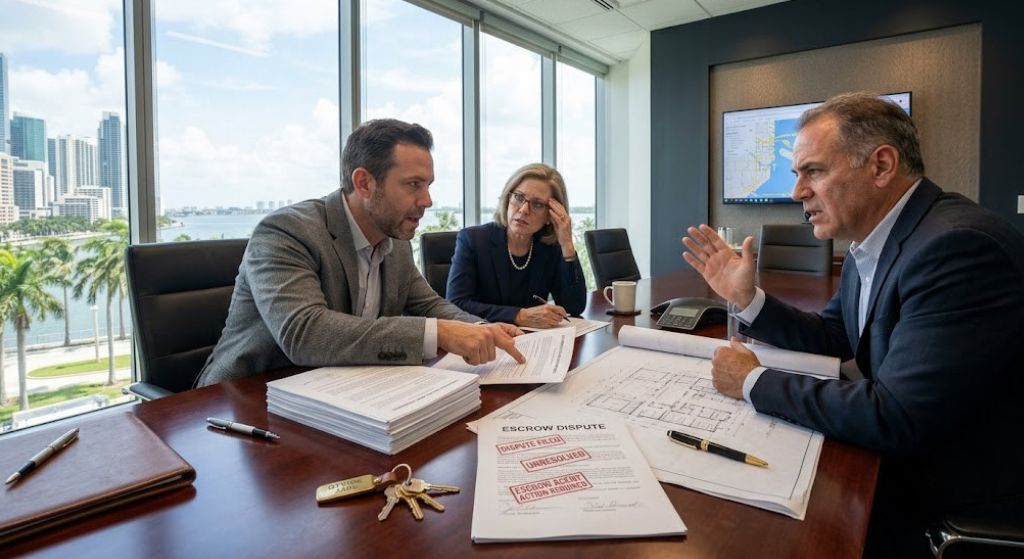
Commercial Real Estate Escrow Disputes happen when money or closing documents are stuck with a neutral holder because the buyer and seller disagree about who gets what. If a Broward County office or retail closing suddenly stalls, the escrow deposit often becomes the center of the fight, fast.
What Commercial Real Estate Escrow Disputes Are
An escrow dispute is usually less dramatic than it sounds. The money is sitting in an account, the deal is not moving, and each side believes the contract gives it the better argument. In a South Florida commercial deal, that can happen after a title issue pops up, a financing deadline passes, or due diligence uncovers a problem that changes the economics of the property.
How escrow works in a commercial property deal
In a typical commercial transaction, you place a deposit with an escrow agent, often a title company or attorney, after signing the purchase agreement. That agreement is the rulebook. It sets the deposit amount, deadlines, inspection rights, closing date, default remedies, and what must happen before funds are released.
Title work is the review of ownership records, liens, judgments, and other matters affecting clear title. Due diligence is your chance to inspect the property, review leases, check income, study zoning, and look for environmental or building issues. Closing instructions tell the escrow holder exactly how to handle documents and money when the deal closes. If any of those pieces are vague or missed, disputes start.
Why commercial escrow disputes get complicated fast
Commercial deals are rarely simple. Deposits are larger, contingencies are layered, and more people are involved. A shopping plaza in Hollywood may include tenant estoppels, service contracts, zoning questions, and lender requirements, all on separate timelines.
The catch is that one missed step can affect everything else. A delayed survey can hold up title review. A lease problem can affect financing. A financing delay can trigger a default claim. By the time the escrow agent gets competing demands, nobody is arguing about feelings. Everybody is arguing about contract language.
The Most Common Causes of Escrow Disputes in South Florida
Most escrow fights start the same way: the deal changes, the timeline slips, and the contract is not as clear as everybody assumed at signing.
Missed deadlines and unclear contract terms
Inspection periods, financing contingencies, cure periods, and extension rights sound straightforward until somebody reads them differently. If your contract says notice must be delivered by a certain date, but you send it late or in the wrong format, that mistake can decide the deposit.
Unclear drafting is one of the biggest reasons disputes happen. If the agreement does not clearly say when a contingency expires or how an extension works, each side fills in the blanks in its own favor.
Title, survey, and lien problems
A title commitment may reveal an old lien, unresolved judgment, code issue, or easement that limits use of the property. A survey may show encroachments, boundary problems, or access issues. Suddenly, the question becomes whether the defect is serious enough to let you cancel, or whether the seller gets extra time to cure it.
That is where deposits get stuck. One side says the problem kills the deal. The other says it is fixable and closing should continue.
Due diligence findings that change the deal
Environmental concerns, bad roof reports, lease problems, unpermitted work, delayed estoppel certificates, or income numbers that do not match the rent roll can all change your view of the property. In commercial real estate, due diligence is where assumptions meet documents.
If you try to terminate after a negative finding, the seller may argue you missed the deadline or waived the issue. What looked like a clean exit can turn into a deposit fight overnight.
Default claims between buyer and seller
This is the classic escrow dispute. You say the other side breached first. The other side says the same about you.
Common examples include failure to deliver required records, refusal to close after contingencies are satisfied, or last-minute attempts to rewrite deal terms. Once both sides claim default, the escrow holder usually freezes the funds until the dispute is resolved.
How Escrow Funds Can and Cannot Be Released
This is one of the first questions that comes up, and the answer is simple: escrow agents can release funds only when the contract or written instructions clearly allow it.
When release is straightforward
Release is usually easy when the transaction closes, when both sides sign matching written instructions, or when the contract spells out a clear trigger for release. If the agreement says the deposit becomes nonrefundable after a specific deadline and the facts are undisputed, that may support release.
When the escrow agent must keep the funds in place
If the escrow agent gets conflicting demands, unclear default claims, or a messy factual dispute, the funds usually stay put. An escrow agent is a neutral holder, not a referee. Picking a side without clear authority can create liability.
Why “just send the deposit back” usually does not work
Pressure does not move escrow money. One angry email, a chain of text messages, or a confident claim that the deal is dead usually changes nothing. Once a dispute starts, the funds typically stay where they are until the parties agree or a court decides.
Ways to Prevent an Escrow Dispute Before It Starts
The best escrow dispute is the one you never have. In commercial deals, prevention is mostly about clarity and recordkeeping.
Tighten the purchase agreement
Your purchase agreement should be painfully clear about deadlines, notice methods, default remedies, extension procedures, and escrow release language. Plain English beats fancy drafting every time. If the contract leaves room for guesswork, guesswork will show up at the worst possible moment.
Document every notice, objection, and extension
If you object to title, ask for a cure, extend a deadline, or waive a contingency, put it in writing and keep it organized. A deadline change confirmed before 5 p.m. on a Friday in Fort Lauderdale is worth far more than a vague verbal understanding on the way out the door.
Choose the right escrow agent and instructions
Use an escrow holder with real commercial closing experience and clean written instructions. The instructions should address how funds are held, what documents authorize release, and what happens if a dispute breaks out. Think of it like labeling the exits before the building gets crowded.
How Commercial Real Estate Escrow Disputes Get Resolved
Most disputes do not start in court. They start with somebody lining up the contract, the emails, and the timeline.
Direct negotiation between the parties
A lot of deposit disputes can be narrowed through contract review, written demands, and a sober look at deadlines. Fast, organized communication matters. If the problem is small enough, a negotiated release or settlement can save months of delay and a pile of fees.
Mediation as a practical middle ground
Mediation is a structured settlement meeting with a neutral third party. It often works well in commercial real estate because it is private, faster than litigation, and flexible enough to allow creative outcomes. Sometimes you still want the deal. Sometimes you just want a clean break without burning more time.
Litigation or interpleader when nobody agrees
If nobody backs down, the dispute may end up in court. In some cases, the escrow holder files an interpleader action, which is just a court request asking: “You decide who gets the money.” That protects the escrow holder from choosing sides and lets a judge resolve the competing claims.
What to Do If Your Escrow Dispute Is Already Happening
If the dispute is already live, calm beats speed, but organized speed beats chaos.
Review the contract and timeline first
Pull the signed contract, every amendment, all notices, escrow instructions, and any closing correspondence into one file. Put everything in date order. The timeline usually decides more than emotion does.
Stop informal side deals that are not documented
Do not rely on handshake fixes, verbal extensions, or half-agreements buried in phone calls. Those shortcuts often make the dispute worse because each side remembers the conversation differently.
Get legal guidance before the deposit gets tied up longer
Commercial escrow fights can drag on if nobody takes control early. Legal guidance from somebody familiar with South Florida closings, Broward County title issues, and commercial deal structure can protect your leverage and help you move toward either closing or a clean release.
Common Questions About Commercial Real Estate Escrow Disputes
Can an escrow agent decide who wins the dispute?
Usually no. In most contested situations, the escrow agent must stay neutral and hold the funds unless the contract clearly authorizes release or both sides give matching written instructions.
What happens to the deposit if the deal falls through?
It depends on the contract, the reason the deal failed, and whether deadlines and contingencies were handled correctly. The deposit does not automatically go back to the buyer or automatically stay with the seller.
Is mediation required before filing a lawsuit?
Sometimes. The answer depends on the contract language and the posture of the dispute. That clause matters more than people expect, so check it early.
What is the first thing to try?
Line up the contract, notices, amendments, and escrow instructions in date order, then compare them against the closing timeline. That single step often shows where the real dispute begins, and that is the best place to start fixing it.