
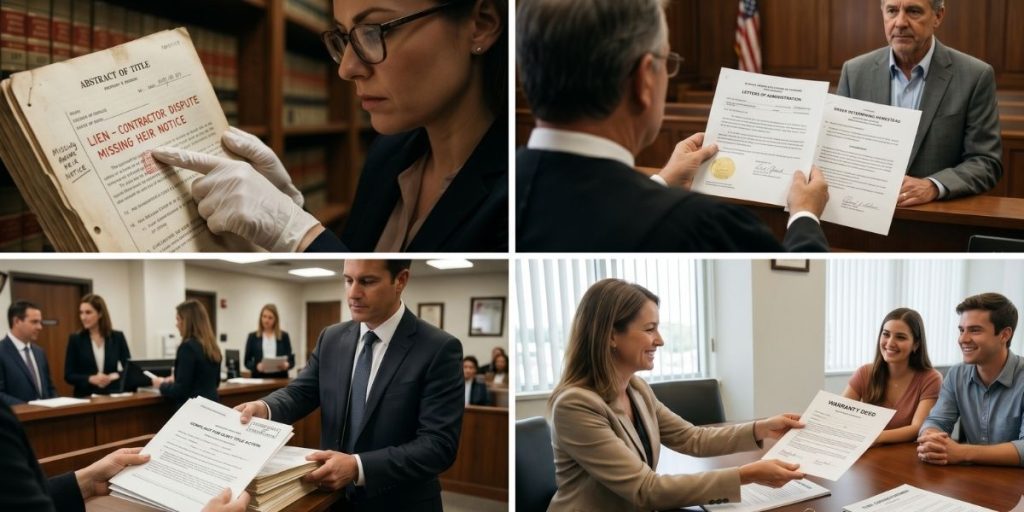
Clear Title Defects after inheriting Florida real estate often feels like untangling a knot that was tied over decades: an old deed, a half-closed probate, a mortgage someone swears was paid off. The good news is that most clouds on title follow predictable patterns, and a clean, insurable path to closing is usually available when the paperwork and authority line up.
Prerequisites: What You’ll Need to Clear Title Defects in Florida Probate
Before any curative work starts, the fastest closings come from treating the file like a checklist-driven project, not a scavenger hunt. Title defects rarely disappear with a single document, they get cleared by assembling proof of death, ownership history, and legal authority, then recording the right instruments.
Key documents to gather upfront (death, ownership, and authority)
A strong starter packet includes the death certificate, the will and any trust, and probate authority documents (commonly Letters of Administration). The file should also include prior recorded deeds, mortgage and HELOC statements, property tax bills, HOA or condo account information, and any prior owner’s title policy. Many delays happen because “paid” is not the same as “released,” and title typically needs recorded proof, not a screenshot of a bank balance. Guidance on assembling these documents early is widely recommended for inherited-property sales because it prevents avoidable closing extensions (see key title-supporting documents).
Identify the decision-makers (personal representative vs. heirs vs. trustees)
In Florida probate, the personal representative (executor) usually has the legal power to sign corrective documents, deal with creditors, and convey the property, but only after the court issues proper authority. Heirs and beneficiaries may be the economic owners, but they often cannot sign a deed during administration unless the structure is non-probate or the court permits it. When property is held in a trust, the trustee generally signs and transfers under the trust terms, which can shorten the path to marketable title.
Choose your professionals (probate attorney, title company, closing agent, realtor)
The probate attorney handles court filings, authority to sell, and any disputes that would otherwise poison a closing. The title company runs the search, issues the commitment, and drives curative requirements. The closing agent coordinates payoffs, estoppels, and recording. A realtor can be helpful, but listing should follow the title plan, not lead it. For estates with complexity or commercial assets, teams often lean on specialized counsel familiar with commercial probate administration issues so title and deal terms do not drift out of sync.
Step 1: Confirm How the Property Transfers (Probate, Trust, or Non‑Probate)
- Pull the most recent recorded deed from the county records.
- Identify how the owner held title at death and whether a trust is involved.
- Confirm whether a probate case exists, and if not, whether one is required.
- Document the intended recipient(s) under the will, trust, or intestacy.
Checkpoint: the transfer pathway should be clear enough to name who will sign the eventual deed and what court authority, if any, is required.
Check the deed for vesting and survivorship language
Common vesting includes sole ownership, tenants in common, joint tenancy with right of survivorship, and tenancy by the entirety (for spouses). Survivorship language can move title outside probate when properly set up, while tenants in common generally requires probate for the deceased owner’s share. When deed language is unclear, practitioners often confirm whether probate is needed by examining the deed and ownership structure (see examining the deed).
Determine if homestead rules or family protections affect transfer
Homestead can be a quiet source of title defects because Florida rules can limit who inherits and how the property can be devised. If a will attempts to leave homestead to someone the law does not allow, the title solution is not “record the will,” it is correcting the transfer through the probate process so the right heirs take by law. For heirs focused on keeping protections intact, a deeper read on homestead protection basics helps explain why some transfers must be handled carefully.
Decide whether full administration, summary administration, or ancillary probate applies
- Determine whether formal administration is required (often when complexity, disputes, or higher asset levels exist).
- Check whether summary administration is available, which can be faster when the estate fits statutory requirements, and it is often used to unblock sale timelines (see summary administration availability).
- If the decedent lived outside Florida but owned Florida real estate, ancillary probate may be needed to transfer title locally, a common snag for out-of-state heirs. A focused overview of ancillary probate for nonresidents can prevent wasted time pursuing the wrong procedure.
Step 2: Order a Florida Title Search and Pinpoint the Exact “Cloud on Title”
- Open title with a Florida title company and request a full search and title commitment.
- Review the commitment’s Requirements and Exceptions with the probate attorney.
- Identify which items must be cured versus those that can be insured over.
- Build a cure plan that matches the probate timeline and intended sale date.
Checkpoint: the estate should have a written list of “must-fix” items required for a policy to be issued at closing.
What a title commitment reveals (Schedule A/B, requirements vs. exceptions)
Schedule A typically states the proposed insured, the legal description, and the estate’s current vesting. Schedule B-1 (or the Requirements section) is the to-do list, items that must be satisfied to issue title insurance. Schedule B-2 (or Exceptions) lists items that will remain as exceptions unless addressed, such as easements, restrictions, or survey matters. A cloud on title is essentially a credible future claim against ownership, and items like a lis pendens can create that cloud by public notice of litigation (see cloud on title).
Common inherited-property title defects in Florida (what to look for)
Probate-related problems include missing orders, incorrect legal descriptions, or a deed that was never recorded into the estate’s chain. Non-probate defects commonly include unreleased mortgages, judgment liens, municipal code liens, unpaid property taxes, and identity mismatches where the decedent’s name is inconsistent across records. Even a paid-off property can be blocked by liens and taxes that attach to the land and must be resolved before sale (see liens or unpaid taxes).
Special issue: missing heirs, outdated addresses, and unclear chains of title
Multi-generation ownership creates gaps: an old unprobated estate in the chain, a deed signed by someone without authority, or an heir who cannot be located to confirm or disclaim an interest. Title companies and buyers usually treat this as a hard stop because the risk is not theoretical, it is a future lawsuit. These files often require formal heirship work, affidavits, or, in stubborn cases, litigation to establish ownership.
Step 3: Cure Probate-Related Defects So the Estate Can Convey Marketable Title
- Ensure the correct probate case type is filed and active.
- Obtain court authority and Letters of Administration as needed.
- Clear creditor and notice requirements that block distribution.
- Prepare the conveyance deed that matches the title commitment requirements.
Checkpoint: the personal representative should have clear authority to sign and the estate should be positioned to convey title that a title insurer will underwrite.
Open or fix the probate case to obtain proper authority
Florida courts generally cannot transfer a decedent’s property until the estate is opened, notice requirements are met, and creditor issues are addressed (see estate opened in court). In practical terms, this is why deals stall when heirs try to “sign something quick.” Authority first, then curative documents, then listing and closing. For out-of-state family members coordinating logistics, a plain-language breakdown of executor duties across state lines helps align expectations with what the court and title underwriter will require.
Record the right documents in the right order
- Record probate orders that establish authority or determine homestead, if applicable.
- Record the personal representative’s deed (or trustee’s deed) with the correct legal description.
- Record supporting affidavits that the title company requires (name variations, heirship, identity).
- Record satisfactions and releases after liens are paid.
Checkpoint: after recording, the public record should show a clean chain from the decedent to the estate conveyance and then to the buyer or new owner.
Resolve disputes and competing claims before listing the property
If heirs disagree, if a creditor claim is contested, or if a will contest is threatened, a listing can become a liability. Buyers and lenders rarely close while a dispute is live because any post-closing challenge can unwind ownership or trigger title claims. When conflict is unavoidable, counsel may need to pivot toward probate litigation strategies rather than forcing a sale that will predictably fail.
Step 4: Clear Liens, Payoffs, and Municipal/HOA Issues That Block Closing
- Order written payoffs for every recorded mortgage and lien.
- Verify property tax status and any tax certificates.
- Request municipal lien searches and code enforcement status.
- Obtain HOA or condo estoppels early and re-order them if they expire.
Checkpoint: the title commitment requirements should show “satisfied” items with recorded releases, not merely paid invoices.
Obtain payoff statements and release documents (mortgages and HELOCs)
Payoffs should be requested in writing, with instructions for wiring and the lender’s timeline for issuing a recorded satisfaction. When an old lender has merged or disappeared, the cure may involve successor documentation or statutory procedures, and it can take weeks. Estates facing payment pressure should also watch for default risk; missed payments can trigger acceleration and complicate title, which is why avoiding foreclosure during administration is often part of the title plan.
Address property taxes, tax certificates, and assessments
Property taxes must be current for most closings, but the deeper issue is whether tax certificates or special assessments exist that create additional recorded claims. Title will require proof of payment and, where applicable, releases or evidence of redemption that clears the public record.
Handle code enforcement, permits, and municipal liens
Unpermitted work can lead to open permits or code enforcement fines that become liens. Some municipalities allow negotiation or lien reductions, but the paperwork must be documented in a way the title insurer accepts. Timing matters because municipal lien searches can uncover last-minute surprises.
HOA/COA estoppels and condo-specific hurdles
Condos and HOAs often require estoppel letters stating amounts owed, along with association approval procedures and document requests. Estoppels expire, and accounts can change quickly when late fees and special assessments post. Ordering estoppels early, then calendaring re-orders near closing, prevents avoidable extensions.
Step 5: Use Title Insurance and Curative Tools to Make the Property Sale‑Ready
- Confirm who will pay the title premium and choose the closing and title team accordingly.
- Review the final title commitment requirements and exceptions.
- Complete curative recordings and obtain policy approval.
- Close only when the policy can be issued as agreed.
Checkpoint: a clear closing means the deed and all releases are recordable immediately, and the title insurer is ready to issue the policy on the closing date.
Owner’s policy, lender’s policy, and when reissue rates may apply
Florida title insurance is typically a one-time premium, not an annual renewal. Florida’s Department of Financial Services publishes standard rates, including regulated rate schedules and lower reissue rates when a prior policy exists, which can matter if the property was refinanced or purchased relatively recently. A lender’s policy may also be required when the buyer finances, and it can be issued for up to 125 percent of the loan amount.
When title insurance can cover issues vs. when it won’t
Title insurance is meant to protect against unknown defects and hidden claims that were not discovered in the search, but exclusions and survey exceptions are real. Known defects, post-policy liens created by the insured, and certain boundary or permit problems are common pain points. Reading the commitment and proposed policy is not paperwork theater, it is where surprises get prevented.
Common curative instruments: corrective deeds, affidavits, and quiet title actions
Corrective deeds can fix legal descriptions, name errors, and scrivener issues when the right parties have authority. Affidavits can support identity and heirship facts, but they do not replace missing legal authority. Quiet title actions are the heavy tool when the chain is broken, an heir cannot be located, or competing claims must be judicially extinguished. This is also where specialized coverage becomes relevant, and a deeper primer on probate-focused title protection helps explain why inheritance transactions can be underwritten differently than ordinary resales.
Red flags: “title lock” products vs. real title insurance
Monitoring products may alert someone to recorded activity, but they are not insurance and they do not pay covered losses. Florida’s consumer guidance has repeatedly emphasized this distinction, so heirs and investors should treat “title lock” as a notification service, not a cure.
Troubleshooting: Common Problems That Derail Closings (and How to Get Unstuck)
“We can’t find an heir” or an heir won’t cooperate
The practical path usually involves attorney-directed notice procedures, negotiation, and sometimes court action to establish who has an interest. Buyers and lenders generally will not close with an unresolved heir claim because it can unwind the deal later. When deadlock is the real issue, a last-resort option can be a partition case, which forces a sale and divides proceeds, but it is typically expensive and slow (see partition action).
“The mortgage was paid years ago” but still shows on title
A payoff history is not enough. The cure is a recorded satisfaction or release, and if the lender is defunct, the solution often involves tracking the successor or using statutory processes to clear the record. Title will usually require the recorded instrument before insuring.
“There’s a lien we didn’t know about” discovered right before closing
The triage sequence is: verify the lien is valid, obtain a written payoff, negotiate if possible, then record the release. If the lien cannot be resolved before closing, the deal may need escrow holdbacks or an amended closing timeline, but only if the title insurer agrees.
“Probate is taking too long” and you need to sell
Probate in Florida can range from a few months to more than a year, and delay is often predictable when notice and creditor timelines are ignored. The usual fix is not rushing a buyer, it is aligning listing with probate milestones, petitioning early for authority to sell, and tackling title requirements immediately. A focused overview of selling during probate without delays helps connect court timing to real closing calendars.
“Cash buyer wants to close fast” but title isn’t clear
Cash does not solve title. A fast close is still a failed close if the deed cannot be insured. The safer structure is a contract timeline that allows curative work, with escrow terms that document exactly what must be cleared before funds release.
Expected Outcome: What “Clear Title” Looks Like and What to Do Next
Checklist for a marketable, insurable title file
A clean file usually means probate authority is documented, the correct deed is recorded, and all title requirements are satisfied with recorded releases. Taxes are paid, municipal searches are cleared, and association estoppels are current. Most importantly, the chain of title reads logically from the decedent’s ownership to the conveying authority and then to the buyer or beneficiaries.
Next steps: sell, keep, or transfer, with tax considerations for heirs
Many heirs benefit from the stepped-up basis rule, where basis resets to fair market value at date of death, often shrinking capital gains dramatically. A commonly used example: a home bought for $100,000 worth $400,000 at death and sold for $405,000 may create only a $5,000 gain. That is why a date-of-death appraisal is often treated as a must-have for both tax reporting and cleaner estate records (see stepped-up basis). Florida also has no state inheritance tax or estate tax, so the tax conversation is usually federal and fact-specific.
When to escalate to a Florida probate/title attorney
Escalation is warranted when homestead is disputed, heirs are missing, a quiet title action is likely, large liens appear, or litigation threats surface. It is also warranted when timelines matter and the file has multiple moving parts that must be sequenced correctly, authority, recordation, releases, and insurability.
In practice, deal speed comes from controlling the timeline and document flow. Klein and Fortune keeps closings moving by handling escrow and title coordination under one roof, so payoff collection, curative recordings, and final policy issuance are managed as a single process instead of a handoff chain. That structure tends to prevent the typical delays that hit probated estates, especially when signatures, notarizations, and recording logistics span multiple states. Scheduling a consultation with Klein and Fortune is the cleanest way to map the probate timeline to a realistic closing date and document review plan.
Frequently Asked Questions
What does it mean to clear title defects on inherited Florida property?
It means removing or resolving recorded issues that prevent a buyer or title insurer from accepting ownership, such as missing probate authority, unreleased mortgages, liens, or gaps in the chain of title.
Can an heir sell a Florida house before probate is finished?
Sometimes, but only if the transfer is non-probate (for example, survivorship deed or trust) or if the probate court has authorized a personal representative to sell and the title company can insure the conveyance.
How long does it take to clear a cloud on title in Florida probate?
Simple files can be cured in weeks once authority is in place, but probate-driven issues can take months. Disputes, missing heirs, or quiet title litigation can push timelines well beyond a year.
Will title insurance fix every problem automatically?
No. Title insurance can cover certain unknown defects, but it will not insure over known issues without a cure, and many boundary, survey, permit, and post-policy problems fall under exclusions or exceptions.
What if the estate believes a mortgage was paid off but it still appears on title?
The fix is obtaining a recorded satisfaction or release. If the original lender no longer exists, the cure may require tracing successors or using legal procedures that a title company and attorney can coordinate.
This article is for informational purposes only and does not constitute legal advice. Accreditation requirements vary by state and payor contract. Consult with a qualified attorney regarding your specific compliance obligations.