
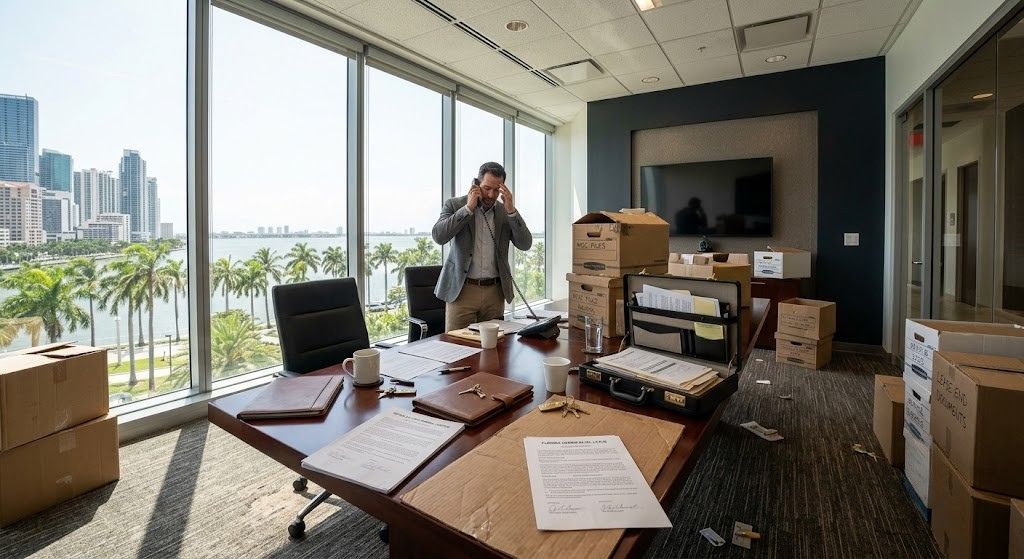
A Commercial Lease Holdover Florida problem starts when a tenant stays in the space after the lease ends and no new signed deal is in place. That sounds small until you show up for a walk-through in Fort Lauderdale, expecting vacant possession, and find the lights on, shelves stocked, and business still humming along.
What Commercial Lease Holdover Means in Florida
In plain English, a commercial lease holdover happens when the lease expires but the tenant does not leave. No fresh lease, no clean handoff, just continued possession. For a property purchase, that can turn into a fast-moving risk around title, closing, possession, and income assumptions.
Here’s the thing: during a sale, occupancy is not just a side issue. If your plan is to renovate, redevelop, move your own business in, or sign a new tenant, a holdover can jam the whole timeline. It is a bit like buying a house because you want the garage, then finding somebody else still using it as a workshop.
Why holdover matters more during a sale
A holdover is more than a landlord-tenant annoyance when a deal is on the table. Your lender may care about who is in possession. Your title company may care about whether vacant possession is actually being delivered. Your estoppel certificates, those signed tenant statements that confirm lease facts, only help if the facts are true on the ground.
If your numbers assume market rent, vacant delivery, or a quick build-out, a holdover tenant can throw off all three at once. That is why this issue belongs in due diligence, not just in the property manager’s inbox.
How Holdover Tenancies Usually Work Under Florida Commercial Leases
Most of the time, the lease itself is the starting point. Commercial leases often spell out what happens if the tenant stays past the expiration date, including what rent applies and what kind of tenancy exists after expiration.
Florida commercial holdover situations are heavily shaped by the contract language and the parties’ conduct. In other words, what the lease says matters, and what happens after expiration matters too.
Holdover clause
A holdover clause is the section of the lease that tells you what happens if the tenant remains after the term ends. Many commercial leases set a higher rent during holdover, sometimes 150 percent or 200 percent of the last monthly rent. Some say the occupancy becomes month-to-month. Some allow only a short temporary period before default consequences kick in.
That clause matters because it can change the economics of the deal overnight. A property that looked tidy on paper can look very different once you notice holdover rent, extension language, or a seller who has been treating an expired lease like business as usual.
Tenancy at sufferance, in plain English
“Tenancy at sufferance” sounds dramatic, but it is really just legal shorthand for a tenant staying after the right to stay has ended. The occupant remains in possession without a full new agreement in place.
For you as a buyer, the main problem is uncertainty. Uncertainty about possession, about enforcement, and about what rights carried over after the lease expired. That uncertainty is expensive.
What happens if rent is still being accepted
This is where real deals get messy. If the seller kept taking rent after the lease ended, that can affect how the occupancy is characterized. Maybe it stayed a holdover. Maybe it started to look more like a continuing tenancy under the lease terms or by conduct.
You do not need to solve that from the parking lot. But you do need the lease, the amendments, and the rent history reviewed before closing, because payment patterns can change your risk in a very real way.
The Biggest Risks a Holdover Tenant Creates During a Property Purchase
The biggest buyer-side risk is simple: you may not get what you thought you were buying, at least not on the timeline you expected.
Delayed possession and failed business plans
If your plan depends on vacancy, a holdover can block it cold. Renovations get pushed back. Demolition gets delayed. A planned opening date for your own business can slip by weeks or months.
That lost time is not abstract. Carrying costs keep running while your space stays unavailable.
Disputes over rent, deposits, and estoppel accuracy
Expired leases often come with stale files and fuzzy facts. Maybe there was an informal extension. Maybe a concession was given by email. Maybe the deposit amount in the file does not match the ledger.
Estoppels help, but only if the lease file, seller disclosures, and actual occupancy line up. If not, you can end up closing into an argument.
Title, lender, and closing complications
Lenders and title insurers care about possession because possession affects risk. If the contract says the property will be delivered vacant, but an occupant is still there, extra diligence often follows. That can mean holdbacks, indemnities, delayed funding, or a postponed closing.
The catch is that the deal may still be salvageable, just not casually.
Eviction costs and post-closing liability
Buying into a holdover problem can mean legal fees, downtime, lost rent, and management headaches after closing. On paper, the purchase price may still look fine. In practice, the real cost shows up later.
What to Review Before You Buy a Commercial Property With a Possible Holdover Issue
Good due diligence is how you catch this before it becomes your problem.
Lease, amendments, and notices
Get the full signed lease file, every amendment, every extension notice, any default notices, and correspondence about move-out dates. Missing paperwork is often where the trouble starts, because gaps invite assumptions.
Rent ledger and payment pattern
Compare the lease terms with the actual payment history. If rent kept coming in after expiration, that detail matters. It can affect how the occupancy is viewed and how risk should be allocated in the deal.
Estoppel certificates and seller disclosures
An estoppel is a signed tenant statement confirming the lease facts, things like rent, term, defaults, and deposits. Check that it matches the lease file, seller disclosures, and what you see on site. If those three do not match, stop treating the file like it is clean.
Inspection and on-site verification
Physically verify possession. A file can say “expired,” but a quick site visit in Hollywood or somewhere else in Broward County can tell a very different story. Active employees, inventory, parked service vans, or installed equipment usually mean the paper story is not the whole story.
Ways to Manage Commercial Lease Holdover Florida Risks in the Purchase Agreement
Spotting the issue is only half the job. The contract is where you control it.
Require clear possession terms
If your plan depends on vacancy, say so clearly in the purchase agreement. Spell out whether closing requires vacant possession, whether removal is the seller’s job, and what rights get assigned if the occupant remains.
Use credits, holdbacks, or escrow
Sometimes the practical fix is financial. A closing credit, escrow, or holdback tied to turnover of possession gives you something better than a promise. It creates a real consequence if the problem is not solved on time.
Add seller reps, indemnities, and document delivery requirements
Specific seller representations matter here. Lease status, side deals, rent concessions, notices, pending disputes, all of it should be addressed directly. An indemnity is just a plain-English promise that the seller covers certain losses if those facts turn out to be wrong.
Common Questions About Florida Commercial Holdover Situations
Does a holdover tenant automatically become month-to-month?
Not always. The lease terms matter, and so does what happened after expiration. Some leases create a month-to-month arrangement. Some do not.
Can holdover rent be higher than regular rent?
Yes, often. Many commercial leases set increased holdover rent, sometimes double rent, though the actual result depends on the lease language and the facts.
Can you close the deal if the tenant is still there?
Yes, but only if the risk is priced, documented, and accepted. That is a business decision, not just a legal one.
Is self-help a good idea in a commercial holdover case?
No. Changing locks, cutting utilities, or trying shortcuts can create bigger problems fast.
A Simple First Step if You Spot a Holdover Risk
Start with three documents: the full lease file, the rent ledger, and the estoppel. Then compare those records against actual possession before you commit to closing. Try that one step early, because a holdover issue is much easier to price, fix, or walk away from before the deed changes hands.